Rail transit systems operate under continuous vibration, temperature fluctuations, moisture and electrical stress, placing high demands on the reliability of electrical insulation and supporting components. In high-speed rail, conventional railway, metro and traction systems, YILONG insulation materials are used in traction motors, transformers, switchgear, power conversion equipment and other onboard electrical assemblies to maintain electrical separation and mechanical stability during operation. Typical components include motor insulation parts, transformer barriers, terminal supports, insulating sleeves and precision-machined structural components. Material selection depends on the specific operating conditions, with key considerations including dielectric strength, flame resistance, mechanical strength, temperature resistance, moisture resistance and dimensional stability.
Engineered for Electrical Safety, Structural Integrity and Reliable Rail Operations
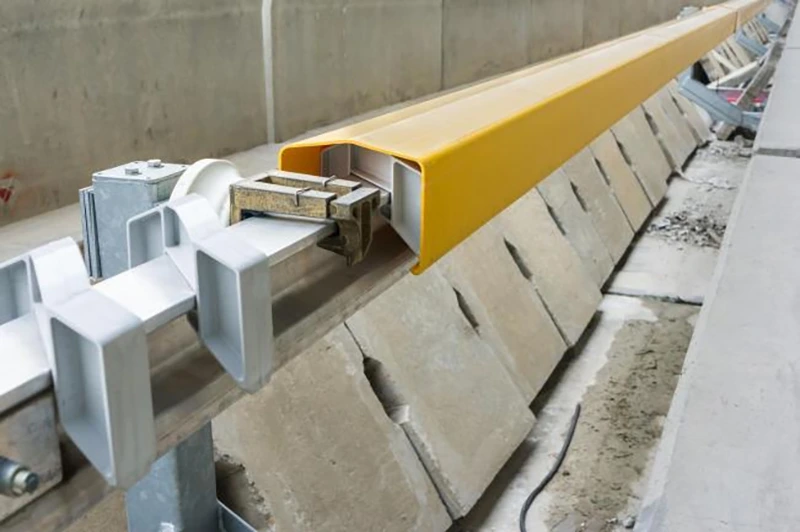
Modern rail transit systems depend on insulating components that perform reliably under conditions rarely encountered in conventional industrial equipment. From third-rail power collection and traction motors to onboard electrical assemblies, these components must withstand electrical stress, mechanical vibration, thermal cycling and demanding operating environments.
The challenge extends beyond preventing electrical conduction. Railway insulation components frequently serve as structural supports, maintaining critical distances between energized conductors and surrounding equipment while resisting repeated mechanical loading.
Thermoset composite materials offer an effective combination of electrical insulation, mechanical strength, dimensional stability and relatively low weight. Their performance can be tailored through reinforcement architecture, resin formulation and manufacturing processes.
YILONG manufactures electrical insulating laminates and precision-machined composite components for railway and mass transit applications. Our material portfolio includes glass-epoxy laminates, polyester-glass composites, phenolic laminates, silicone-glass materials and selected high-temperature insulation products.
With manufacturing experience dating back to 1966, we support equipment manufacturers and component fabricators with insulating sheets, rods, tubes and custom-machined parts.
Why Thermoset Composites Matter in Rail Transit
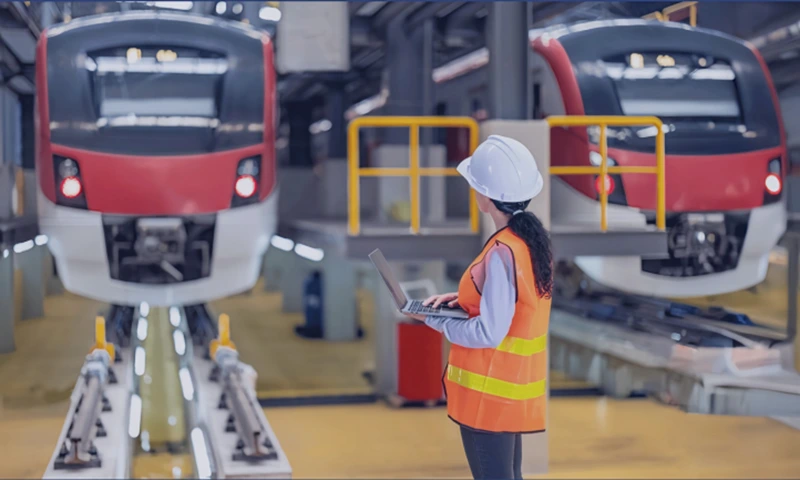
Railway insulation must operate within a complex combination of electrical, mechanical and environmental demands. Material selection therefore requires a broader evaluation than dielectric strength or mechanical strength alone.
Electrical Insulation Under Dynamic Operating Conditions
Railway power systems rely on electrical insulation to separate energized conductors from supporting structures and accessible equipment.
In third-rail systems, insulating supports help maintain electrical separation between the conductor rail and its supporting infrastructure. Within rolling stock, insulating components are used in traction equipment, electrical cabinets, terminal assemblies and other electrical systems.
Electrical performance must be evaluated in relation to operating voltage, environmental contamination, moisture exposure and component geometry.
Bulk dielectric breakdown and surface tracking represent different failure mechanisms. A material with high dielectric strength may still require additional evaluation for tracking resistance when exposed to moisture and conductive contamination.
Creepage distances, electrical clearances and insulation coordination remain essential aspects of the complete equipment design.
Mechanical Strength and Resistance to Repeated Loading
Railway components experience vibration, impact and cyclic mechanical stresses associated with train operation and maintenance.
Insulating brackets and supports may also be exposed to fastening loads, thermal expansion and localized stresses around mounting features.
Glass-fiber-reinforced thermoset laminates offer useful tensile, compressive and flexural properties at relatively low weight.
Unlike isotropic metals, however, laminated composites exhibit direction-dependent mechanical behavior. Their strength and stiffness depend on reinforcement orientation and loading direction.
This makes laminate selection and component design particularly important for load-bearing insulating parts.
Long-term deformation must also be considered. Under sustained loading, polymer-based materials can exhibit creep, and their creep behavior depends on temperature, stress level and formulation.
Appropriate thermoset composites may provide advantages over certain thermoplastics in applications requiring dimensional stability under sustained load, but comparative performance must be established using relevant material data.
Environmental Durability in Railway Infrastructure
Railway systems operate in environments ranging from enclosed tunnels to exposed outdoor infrastructure.
Components may encounter rain, condensation, dust, industrial pollution, temperature fluctuations and cleaning chemicals.
Moisture can influence electrical insulation resistance and surface tracking behavior, while repeated temperature changes may affect dimensional stability and mechanical interfaces.
Thermoset composites generally provide useful resistance to corrosion and many industrial environments. However, resistance to ultraviolet radiation, moisture and chemicals varies significantly between resin systems.
Outdoor third-rail components require specific evaluation for weathering and long-term environmental exposure. Standard indoor electrical laminates should not automatically be considered suitable for exposed trackside service.
Fire, Smoke and Toxicity Performance
Fire safety is a critical requirement for railway rolling stock and many rail infrastructure applications.
Material evaluation may involve flame spread, smoke generation and gas toxicity, depending on the component's location and the applicable railway standards.
EN 45545-2 establishes fire protection requirements for materials and components used in railway vehicles, with different requirement sets and hazard levels determined by their intended use.
A general flame-retardant classification, such as UL 94 V-0, does not demonstrate compliance with EN 45545-2.
Likewise, a material's thermal class does not establish its fire, smoke and toxicity performance.
For projects requiring railway-specific fire compliance, the exact material formulation, component application and applicable test requirements must be reviewed.
Composite Insulation Applications in Railway Systems
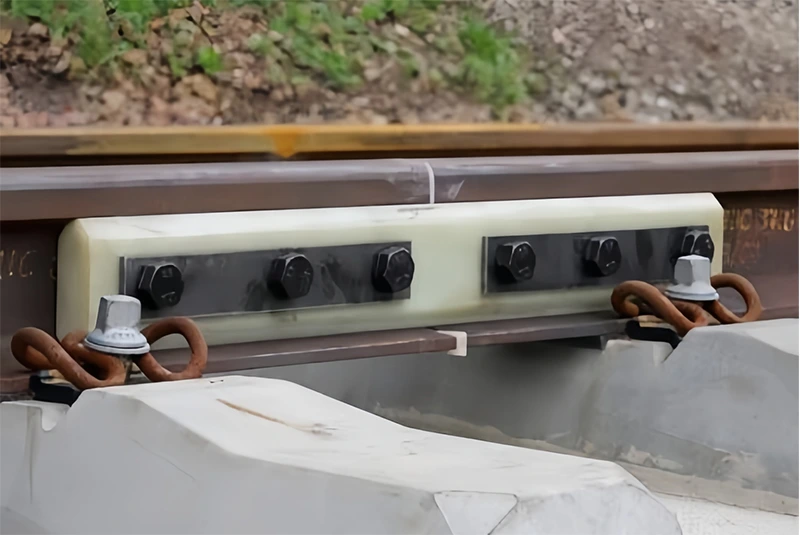
Third-Rail Supports and Insulating Brackets
Third-rail systems supply electrical power to trains through an energized conductor rail. Insulating supports separate this conductor from supporting structures while maintaining the required geometry.
These components operate under a combination of electrical stress, mechanical loading and environmental exposure.
A suitable insulating support must provide:
● Electrical isolation under the specified system conditions
● Adequate mechanical strength and stiffness
● Resistance to moisture and surface contamination
● Dimensional stability across the operating temperature range
● Appropriate long-term environmental durability
Glass-fiber-reinforced composites are potential materials for engineered third-rail insulating supports because they combine structural and electrical properties.
However, not every glass-epoxy laminate is suitable for this application. Outdoor exposure, tracking resistance, mechanical fatigue, fastening design and applicable railway specifications must be evaluated before material approval.
YILONG can supply composite insulating materials and machined support components for technical evaluation against customer requirements.
Third-Rail Covers and Protective Barriers
Third-rail covers help reduce the risk of accidental contact with energized conductors and provide a physical barrier within the track environment.
Their primary function differs from that of load-bearing insulating brackets.
Cover materials may need to provide impact resistance, weathering performance, dimensional stability and appropriate fire behavior, in addition to electrical insulation.
Depending on the design, different polymer composites or engineered plastics may be considered.
Material selection must account for the cover geometry, mounting arrangement, expected environmental exposure and relevant railway requirements.
The suitability of YILONG materials for a particular cover design should be established through engineering review and applicable testing.
Traction Motors and Generator Insulation
Electric traction motors operate under significant thermal and mechanical demands.
Insulating components within these machines help maintain winding position, separate conductive structures and withstand vibration, electromagnetic forces and thermal cycling.
Glass-epoxy laminates are used in selected rotating-machine insulation components, including slot wedges, insulating strips, support blocks and terminal structures.
Higher-temperature grades may be considered where mechanical and electrical properties must be retained at elevated temperatures.
For example, suitable G11 and EPGC308 glass-epoxy laminates offer options for higher-temperature insulation applications.
Mica-based materials may also be used in selected traction motor insulation systems where their dielectric and thermal characteristics are required.
The choice between glass-epoxy structural insulation and mica-based winding insulation depends on the function of the component within the machine.
YILONG supplies high-temperature glass-epoxy laminates, mica insulation materials and machined insulating parts for evaluation in traction equipment.
Onboard Power Distribution and Electrical Equipment
Railway vehicles contain numerous electrical assemblies, including power converters, auxiliary power systems, circuit protection equipment and electrical control cabinets.
These systems require insulating barriers, mounting structures and spacers that provide electrical separation while maintaining mechanical stability.
Glass-epoxy and polyester-glass laminates can be considered for components such as:
● Electrical mounting plates
● Insulating partitions
● Busbar support blocks
● Terminal support components
● Insulating spacers and washers
For compact electrical assemblies, surface tracking resistance and flammability performance may be important selection factors.
GPO-3 and selected high-CTI epoxy laminates offer different combinations of electrical, mechanical and thermal properties for evaluation.
Where components are installed inside railway vehicles, the applicable fire, smoke and toxicity requirements must also be established.
Structural Insulation and Equipment Mounting
Not all railway composite components operate directly adjacent to high-voltage conductors.
Some are used to provide structural separation, vibration-resistant mounting or electrical isolation between metallic assemblies.
Glass-fiber-reinforced laminates and selected phenolic composites can be considered where mechanical strength, machinability and electrical isolation are required.
Component design must account for fastening loads, laminate orientation, environmental exposure and long-term deformation.
The use of composites can also reduce component weight compared with certain metallic alternatives.
However, any resulting energy savings depend on the total vehicle mass reduction and operating conditions; they should not be inferred from the material's lower density alone.
Material Selection for Railway Electrical Insulation
Different rail applications place different demands on insulating materials. Selecting the appropriate composite requires understanding the component's operating conditions and primary engineering function.
Glass-Epoxy Laminates for Structural Insulation
G10 and FR4 are fiberglass-reinforced epoxy laminates offering useful electrical insulation, mechanical strength and machinability.
They may be considered for electrical mounting plates, insulating spacers and structural components where their thermal, environmental and fire performance meet the specified requirements.
Higher-temperature glass-epoxy grades such as G11 and EPGC308 provide additional options for demanding electrical equipment and rotating-machine applications.
Polyester-Glass Laminates for Electrical Supports
GPO-3, also designated UPGM203, is a glass-mat-reinforced polyester laminate commonly used in electrical insulation applications.
Selected grades provide high tracking resistance and flame-retardant properties, making them candidates for electrical barriers, supports and partitions.
For railway applications, the specific material's fire, smoke and toxicity performance must be evaluated separately from its general electrical insulation properties.
Mica-Based Materials for High-Temperature Insulation
Mica insulation materials provide valuable dielectric properties at elevated temperatures.
Their applications may include selected motor and generator insulation systems, high-temperature barriers and specialized electrical insulation assemblies.
Performance depends on mica type, binder chemistry, reinforcement and product construction.
Phenolic and Other Composite Materials
Phenolic laminates offer useful mechanical properties and machinability for selected insulating and structural applications.
Their suitability depends on the required electrical performance, temperature, moisture exposure and mechanical loading.
Silicone-glass laminates and other specialized composites may be considered for applications requiring different thermal or dielectric characteristics.
No single material family is universally suitable for all railway environments.
From Composite Laminate to Finished Railway Component
Reliable railway insulation depends on both material selection and manufacturing quality.
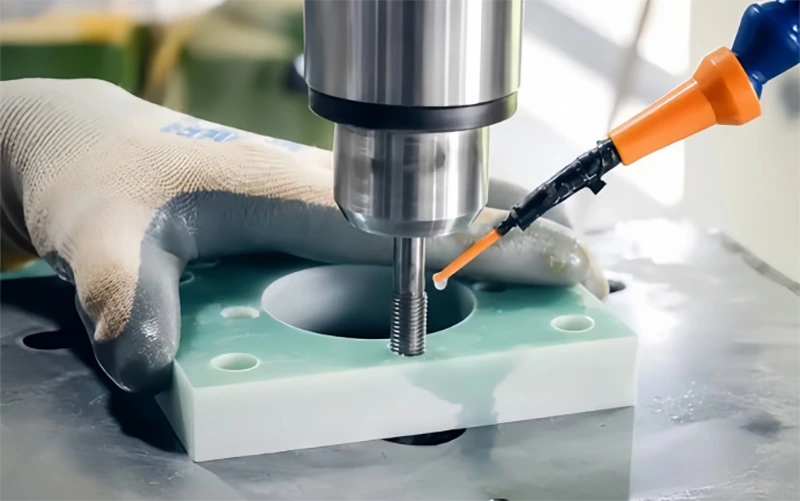
Laminate Manufacturing and Consolidation
Thermoset composite performance is influenced by reinforcement distribution, resin impregnation, laminate consolidation and curing conditions.
Voids, inadequate consolidation and inconsistent processing can affect mechanical integrity and electrical behavior.
YILONG manufactures laminated insulating materials using controlled impregnation and pressing processes.
Our production infrastructure includes nine gluing lines, multi-layer vacuum presses, high-capacity pressing equipment and automated manufacturing lines.
Precision Machining and Component Geometry
Railway insulating components often require complex profiles, mounting holes, grooves and closely controlled dimensions.
Machining quality is particularly important for laminated composites because unsuitable cutting conditions can cause edge damage or delamination.
Fastening geometry, reinforcement direction and stress concentrations must be considered when designing load-bearing parts.
With 98 CNC machines, YILONG supports the production of custom insulating plates, support blocks, spacers, tubes and other composite components according to customer drawings.
Quality Management and Technical Verification
Material consistency and documentation are important for repeat production programs.
YILONG operates under an ISO 9001 quality management system and can review applicable inspection and documentation requirements during quotation and order preparation.
Depending on the material and application, relevant evaluation may include dimensional inspection, mechanical testing, dielectric properties, tracking resistance and environmental performance.
Railway-specific qualification must be addressed separately where required.
Supporting Railway OEMs and Component Manufacturers
Rail transit manufacturers require insulation materials that combine appropriate engineering performance with consistent processing and supply.
YILONG integrates laminate manufacturing and precision machining to support these requirements.
Our manufacturing operations cover a 110,000 m² factory site, including 45,000 m² of workshop space, with annual laminated material production capacity of 15,000 metric tons.
We supply insulating sheets, rods, tubes and machined composite components for industrial electrical applications, including materials that can be evaluated for railway equipment.
For custom projects, our team can review material specifications, operating conditions, drawings, machining requirements and production quantities to determine manufacturing feasibility.
By combining material expertise with integrated manufacturing and precision machining capabilities, YILONG helps railway equipment manufacturers develop reliable insulation solutions that meet their technical and production requirements.
 |
 |
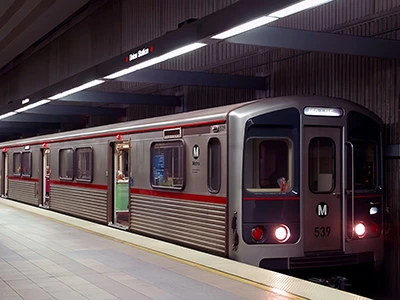 |
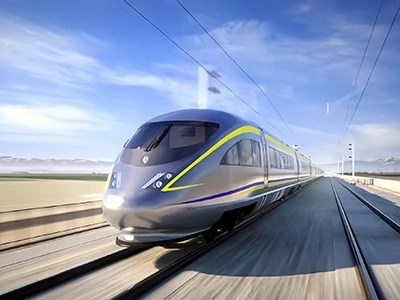
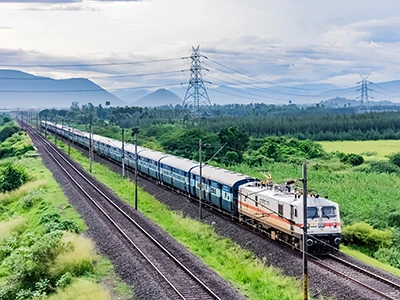
| High speed rail | Railway | Metro |
Common materials include G10, FR4, G11, GPO-3, mica-based insulation, phenolic laminates, and specialized glass-reinforced composites. These materials provide different combinations of electrical insulation, mechanical strength, thermal resistance, and dimensional stability. Selection depends on operating conditions and applicable railway standards.
Glass-fiber-reinforced composites may be suitable for third-rail insulating supports because they combine electrical insulation with structural strength. Material selection must consider operating voltage, mechanical loads, moisture exposure, surface tracking resistance, and outdoor weathering. Specific grades require evaluation against the applicable railway specifications.
High-temperature glass-epoxy laminates, such as suitable G11 and EPGC308 grades, can be used for slot wedges, insulating strips, spacers, and structural insulation components. Mica-based materials are also used in selected motor winding insulation systems where thermal endurance and dielectric performance are critical.
GPO-3 (UPGM203) provides electrical insulation, mechanical strength, and surface tracking resistance, making it a candidate for insulating barriers, mounting plates, and electrical supports. However, its suitability for railway applications depends on the specific material grade, operating environment, and applicable fire safety requirements.
No. UL 94 V-0 evaluates material flammability under specified test conditions, while EN 45545-2 addresses fire behavior requirements for railway vehicle materials and components, including applicable smoke and toxicity criteria. Compliance with UL 94 V-0 does not automatically establish compliance with EN 45545-2. Separate testing and verification are required where applicable.
Yes. YILONG manufactures electrical insulating sheets, rods, tubes, and precision-machined composite components according to customer drawings. Our capabilities support insulating brackets, support blocks, spacers, mounting plates, and other components for railway electrical equipment. Material suitability and railway-specific qualification requirements are reviewed according to the application.

No.3, Mianzhi Street, Zhucheng, Shandong, China


Copyright © 2026 by Qingdao Yilong Insulation Material Company Limited All Rights Reserved


