Industrial equipment and machinery often operate under continuous mechanical loads, vibration, friction, temperature changes and demanding environmental conditions, requiring materials that can provide mechanical strength, dimensional stability and reliable electrical insulation where needed. In heavy industry, industrial machinery, pumps, compressors, motors and mechanical equipment, engineered insulation materials can be used in drive systems, rotating equipment, electrical assemblies and structural components to provide electrical isolation, mechanical support and wear resistance. Depending on the equipment and operating conditions, typical applications include bushings, sleeves, wear-resistant components, insulation barriers, support components and other precision-machined parts, with material selection and machining tolerances tailored to the specific equipment design.
Electrical insulation Materials in Industrial Equipment & Machinery
In industrial equipment, some of the most important components are also among the least visible. A nonmetallic bushing keeps a moving assembly aligned. An insulating block separates an energized component from the machine frame. A wear ring helps maintain a controlled clearance between rotating and stationary parts.
These components may be small compared with the equipment around them, but their performance can influence vibration, mechanical wear, electrical safety, maintenance intervals, and machine availability.
Industrial machinery rarely operates under a single, constant condition. Loads fluctuate during startup and shutdown. Rotating assemblies generate friction and heat. Pumps and compressors expose internal components to process fluids, pressure changes, and repeated movement. Electric motors subject insulating materials to thermal and electrical stresses over extended operating periods.
For these applications, material selection involves more than choosing a laminate with high mechanical strength or a plastic with a low coefficient of friction. The material must perform its intended function within the complete equipment assembly.
YILONG supplies electrical insulation laminates and engineering plastics for industrial equipment, including G10, FR4, G11, FR5, GPO-3, phenolic cotton laminates, and selected thermoplastics. These materials can be supplied as semi-finished stock or manufactured into components such as bushings, sleeves, insulating supports, wear pads, barriers, and machined fixtures.
Heavy Industry: Materials That Carry Loads Without Becoming the Weak Point
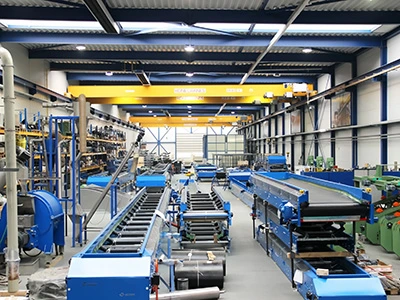
Heavy industrial equipment often operates under sustained compression, intermittent shock, vibration, and substantial mechanical forces. In presses, processing machinery, production lines, and other heavy-duty systems, nonmetallic components may be used to isolate structures, support assemblies, or provide replaceable contact surfaces.
The engineering challenge is not simply whether a material can withstand the maximum applied force. It is how that force passes through the finished component.
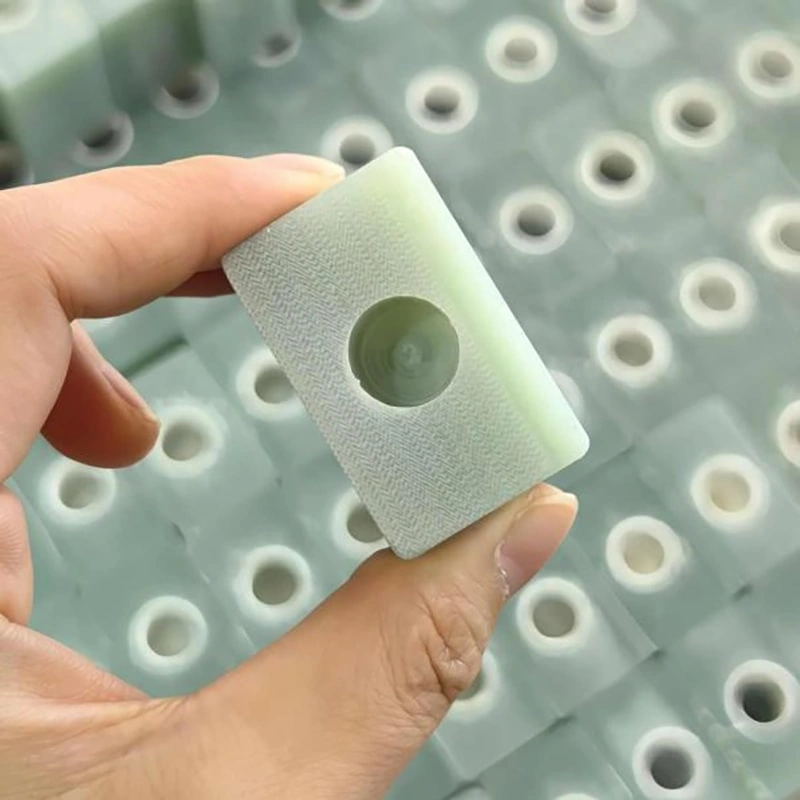
Structural Supports and Insulating Blocks
Glass-epoxy laminates such as G10 and G11 offer high mechanical strength and electrical insulation for selected structural applications.
Their woven reinforcement, however, makes them direction-dependent materials. A load applied through the thickness of a laminate can produce a different response from bending or shear loads acting across its layers.
For example, a large support block may have sufficient compressive strength under a uniformly distributed load but remain vulnerable to localized damage around a mounting hole or unsupported edge.
In heavily loaded assemblies, engineers should evaluate contact area, load distribution, laminate orientation, and fastening details together.
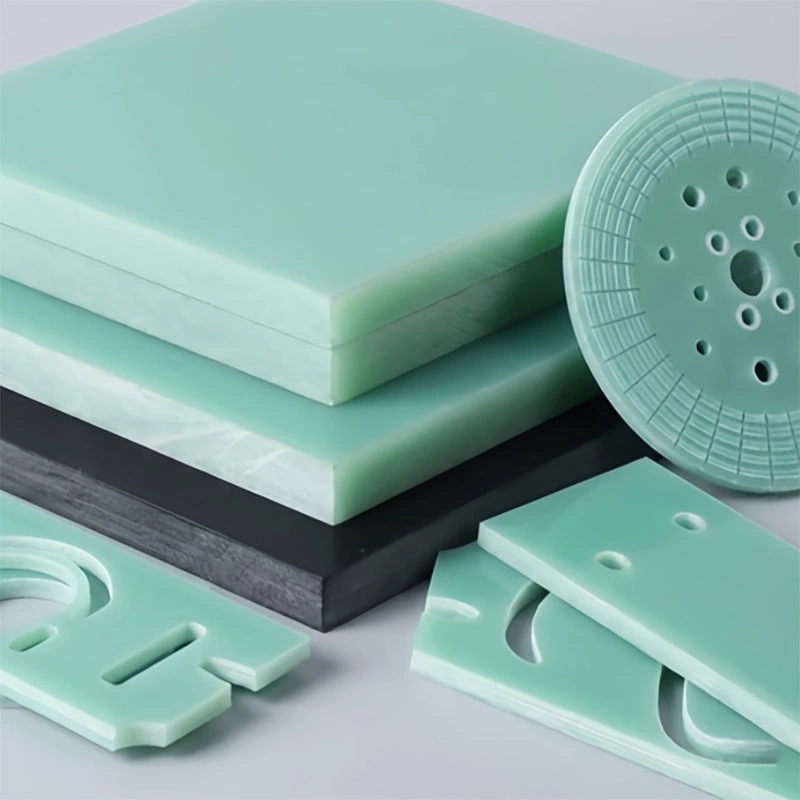
Wear Plates and Replaceable Contact Components
Industrial equipment may use replaceable nonmetallic pads or liners to control contact between moving or loaded surfaces.
Cotton phenolic laminates and engineering plastics can be considered for selected wear interfaces, depending on operating conditions.
The required material behavior changes considerably between a stationary pressure pad and a continuously sliding guide.
A stationary pad may be governed primarily by compression and creep. A moving contact surface must also withstand frictional heating, wear, and changes in contact pressure.
For critical components, short-term strength values should not be used as substitutes for long-term deformation or wear-performance data.
Industrial Machinery: Controlling Movement, Alignment, and Wear
Automated production machinery, conveyors, packaging systems, machine tools, and material-handling equipment depend on controlled movement.
Guides, rollers, bushings, spacers, and positioning components help maintain the relationship between moving parts.
In these applications, small dimensional changes can be more consequential than large differences in ultimate material strength.
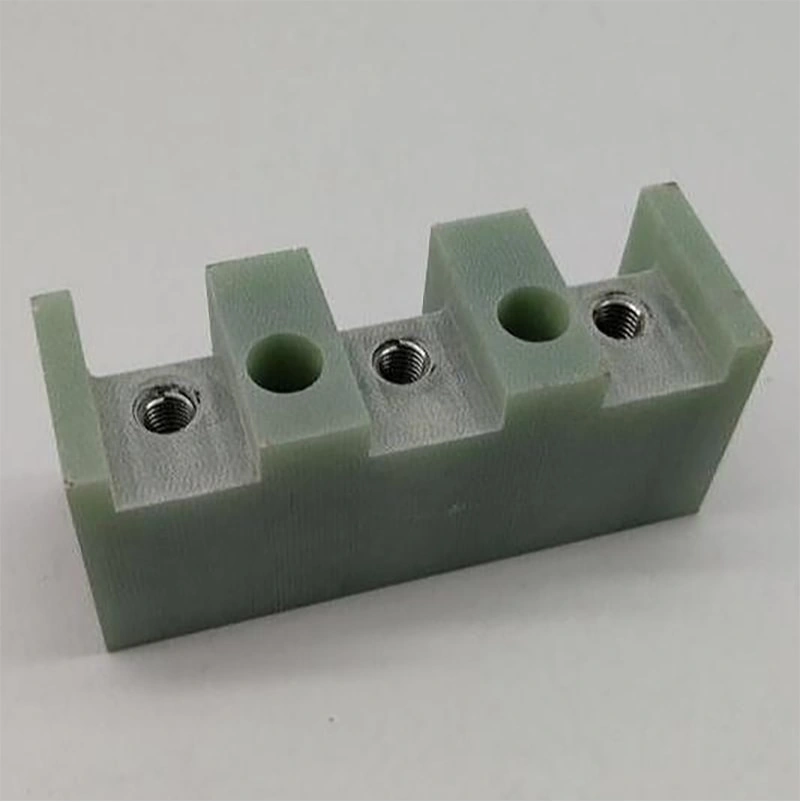
Guide Rails, Sliding Pads, and Bushings
A guide component must maintain a predictable contact surface throughout repeated movement.
UHMWPE is widely considered for low-friction conveyor guides and wear strips. POM offers a useful combination of machinability and dimensional stability for precision mechanical components. Cast nylon provides toughness and wear performance in suitable conditions.
Cotton phenolic laminates may be appropriate where a reinforced thermoset structure and greater load-carrying rigidity are required.
The choice depends on contact pressure, sliding velocity, lubrication, mating surface material, and operating temperature.
Misalignment is particularly important. If a guide carries most of its load along one edge, local pressure can be much higher than the average value calculated from its nominal contact area.
Premature wear may therefore be caused by machine geometry rather than insufficient material hardness.
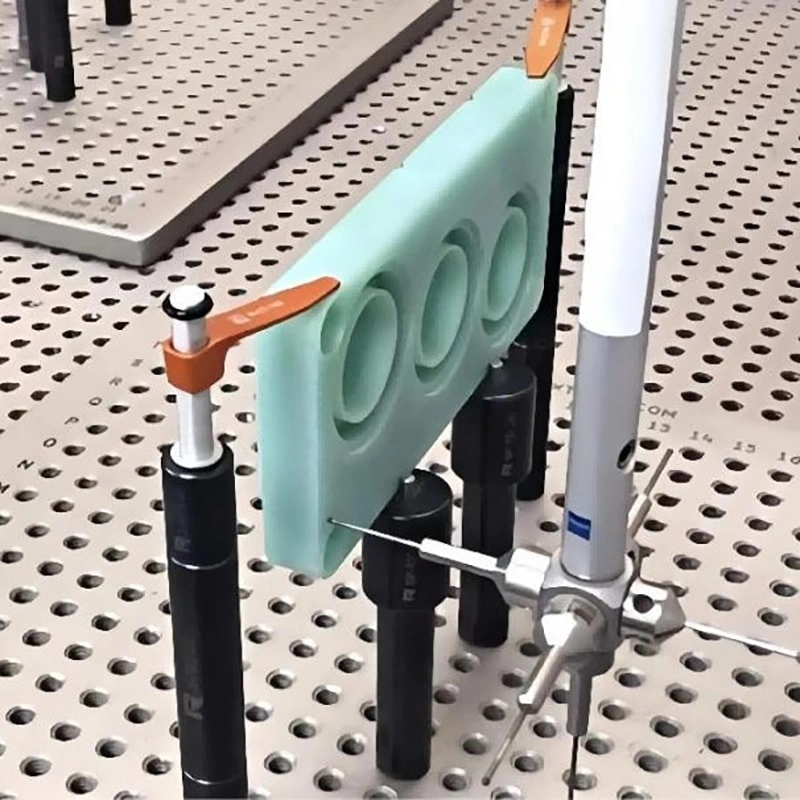
Precision Fixtures and Positioning Components
G10 and FR4 laminates are used for selected nonconductive machine fixtures, mounting plates, positioning blocks, and spacers.
Their structural rigidity and electrical insulation can be useful in equipment containing sensors, electrical assemblies, or conductive machine frames.
However, the component's stiffness, thermal expansion, and machining orientation must be considered when dimensional accuracy is important.
For precision equipment, a material that maintains the required geometry during operation may be more valuable than one with a higher published ultimate strength.
Pumps: Wear Components Must Work with the Fluid and the Clearance
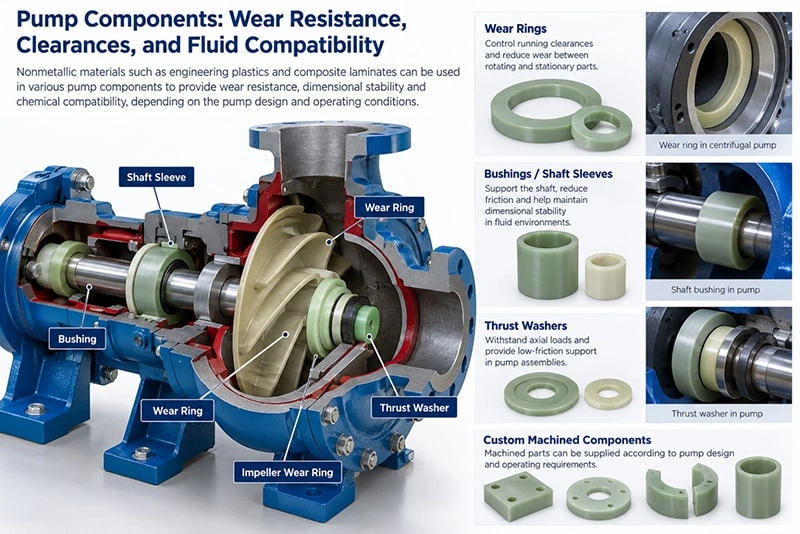
Pump applications require a different approach to material selection.
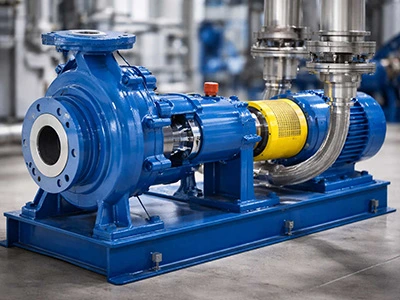
A pump may contain nonmetallic bushings, sleeves, wear rings, thrust washers, and other components that guide movement, control internal clearances, or reduce contact between mating surfaces.
These components operate in direct contact with the pumped liquid or within an environment influenced by that liquid.
Why Running Clearance Matters
In a centrifugal pump, the clearance between rotating and stationary components can affect internal leakage and hydraulic efficiency.
Excessive clearance may increase recirculation losses. Insufficient clearance can increase the risk of rubbing when thermal expansion, shaft movement, or operating transients change the relative positions of the parts.
A nonmetallic wear ring must therefore be evaluated for dimensional stability, wear behavior, and compatibility with the mating component.
A material with low friction is not automatically suitable. It must also retain the required geometry under the expected pressure, temperature, and operating conditions.
Chemical Compatibility and Operating Temperature
The pumped medium can influence material performance as much as mechanical loading.
Water, hydrocarbons, process chemicals, and abrasive slurries create different requirements.
For example, a material suitable for intermittent exposure to a lubricant may not be appropriate for continuous contact with a hot chemical solution.
Material assessment should include fluid composition, concentration, temperature, exposure duration, and the possibility of abrasive particles.
Engineering plastics such as PTFE, PEEK, UHMWPE, and POM may be considered for selected pump components, but suitability depends on the exact grade and service conditions.
Filled or specially formulated bearing materials may be required for demanding wear-ring applications. Standard structural G10 or FR4 should not be assumed to be appropriate substitutes for purpose-designed pump bearing materials.
Startup and Transient Conditions
Pump components must also withstand conditions outside normal steady-state operation.
Startup, shutdown, temporary loss of lubrication, vibration, and unexpected shaft movement can produce contact conditions that differ substantially from the nominal design case.
These transient conditions should be included when evaluating wear resistance and the risk of component damage.
Compressors: Friction, Sealing, and Repeated Mechanical Motion
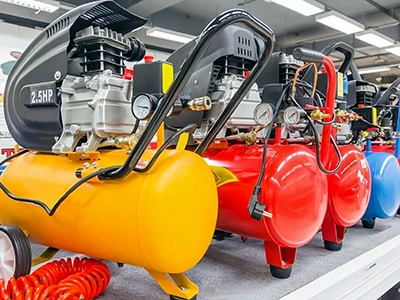
Compressors introduce additional challenges because internal components may experience cyclic pressure, repeated movement, elevated temperatures, and exposure to compressed gases.
The material requirements depend strongly on compressor design.
A reciprocating compressor, for example, has different internal wear and sealing requirements from a rotary screw compressor.
Piston Rings, Rider Bands, and Guide Components
In reciprocating compressors, piston rings primarily control gas leakage, while rider bands support and guide the piston to reduce contact with the cylinder wall.
These functions require different material characteristics.
Sealing components must accommodate pressure differences and maintain suitable contact behavior. Rider bands must support mechanical loads while controlling friction and wear.
PTFE-based compounds are widely used in specialized compressor sealing and wear applications. PEEK and other engineered polymers may be considered where higher stiffness, temperature resistance, or particular wear characteristics are required.
The exact formulation matters. Unfilled PTFE, glass-filled PTFE, carbon-filled PTFE, and other modified materials can have substantially different wear and mechanical behavior.
For compressor applications, the specified polymer compound should be evaluated against the operating gas, pressure, temperature, lubrication regime, and mating surface.
Why Lubricated and Non-Lubricated Service Differ
Lubrication changes the friction and heat-generation conditions at a sliding interface.
A material that performs well with oil lubrication may wear rapidly when used in an oil-free compressor.
Gas composition, humidity, surface finish, and the ability of the material to establish a stable transfer film may also affect performance.
This is why compressor wear components should be selected using application-specific performance data rather than generic polymer properties.
Insulation in Compressor Drive Assemblies
Compressor systems also contain motors, controls, terminal assemblies, and electrical drive equipment.
FR4, G11, FR5, and GPO-3 may be considered for selected insulating supports, terminal boards, barriers, and structural electrical components.
These applications should be evaluated separately from internal gas-contacting parts because their primary requirements concern electrical insulation, thermal endurance, mechanical support, and equipment safety.
Motors: Insulation Must Survive Electrical, Thermal, and Mechanical Stress
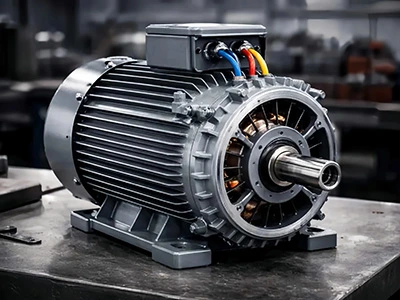
Electric motors are among the clearest examples of machinery in which insulation materials perform a structural function.
An insulating component may separate energized conductors, support winding assemblies, maintain slot geometry, or prevent electrical contact between conductive parts.
During operation, these materials can be exposed to heat, vibration, electromagnetic forces, and repeated thermal cycling.
Slot Insulation, Wedges, and Structural Components
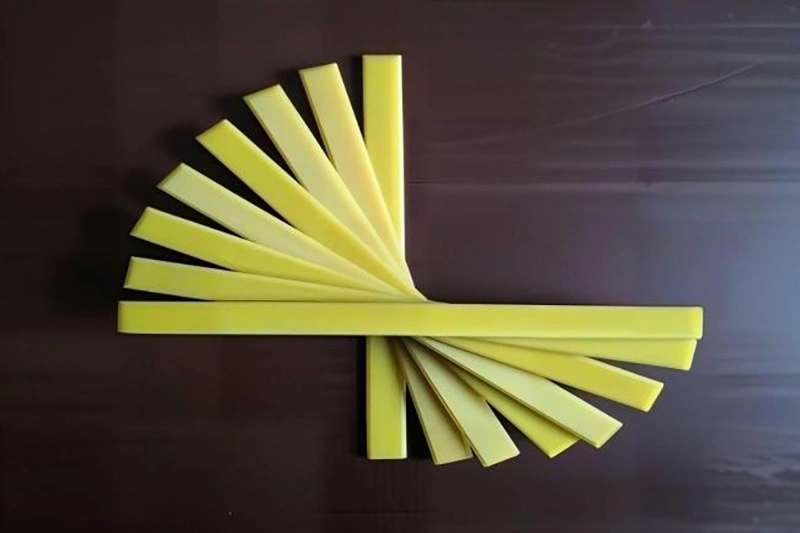
Motor insulation systems may include slot liners, slot wedges, phase insulation, insulating spacers, terminal boards, and other components.
Different parts require different material forms and properties.
Rigid glass-epoxy laminates can be used for selected machined insulation components. Appropriate high-temperature grades, including certain G11 or EPGC308 materials, may be considered where elevated-temperature mechanical and electrical performance is required.
However, a rigid laminate is not interchangeable with flexible slot insulation paper, film, or a qualified insulation system.
The geometry and material must match the actual motor design.
Why Temperature Class Alone Is Not Enough
An insulation material's stated thermal class or temperature rating does not independently establish the service life of a motor winding system.
Thermal aging depends on operating temperature and exposure duration, while electrical stress, vibration, contamination, and manufacturing processes can introduce additional failure mechanisms.
Motor insulation is therefore evaluated as a system rather than by assigning a temperature rating to one component.
When selecting replacement or alternative insulation materials, compatibility with the established motor insulation system must be considered.
Terminal Supports and Electrical Barriers
FR4 and GPO-3 are commonly considered for rigid electrical insulation where flame-retardant behavior is required.
GPO-3 is particularly relevant for selected terminal supports, electrical barriers, and mounting components where tracking resistance is important.
For motor-related electrical components, material selection should address voltage, creepage distance, clearance, operating temperature, mechanical load, and the required flame-performance characteristics.
A high dielectric-strength value alone cannot compensate for inadequate insulation geometry.
Mechanical Equipment: Turning a Material Specification into a Reliable Part
Many industrial equipment manufacturers purchase nonmetallic components according to drawings rather than standard catalog dimensions.
Typical requirements include insulating washers, bushings, sleeves, machined plates, support blocks, guide components, and complex profiles.
In these cases, selecting the correct material is only the beginning. The manufacturing method must preserve the properties and dimensions needed in service.
Material Orientation and Machining Geometry
Glass-fabric and cotton-fabric laminates have layered structures.
Their machining behavior and mechanical performance depend partly on the orientation of those layers.
Drilling near an unsupported edge can increase the risk of breakout or delamination. Thin sections and deep pockets may introduce distortion or reduce component strength.
For heavily loaded parts, laminate orientation should be considered during drawing review rather than after machining has begun.
Dimensional Tolerances and Environmental Changes
A finished part may meet its drawing at the inspection temperature yet experience dimensional changes in service.
Thermal expansion, moisture absorption, residual stresses, and sustained loading can all influence the final fit.
This is particularly important for bushings, press-fit sleeves, long guide components, and precision spacers.
Tolerances should reflect both the required assembly fit and the material's expected behavior under operating conditions.
Selecting the Material by Function
The most effective material specification starts with what the component must accomplish.
A stationary insulating support may require high stiffness, dielectric strength, and resistance to long-term deformation.
A sliding guide requires suitable friction and wear behavior.
A pump bushing must remain compatible with the process liquid and preserve the necessary clearance.
A compressor wear component must withstand its pressure, temperature, gas environment, and lubrication conditions.
A motor insulation component must be compatible with the electrical and thermal requirements of the complete assembly.
Although these components may all be manufactured from nonmetallic materials, their engineering requirements are fundamentally different.
Materials for Industrial Equipment & Machinery
YILONG's material range supports several distinct functions within industrial equipment:
Glass-Epoxy Laminates — Garolite Material - G10, FR4, G11, and FR5
Used for selected structural insulating components, machine fixtures, mounting plates, supports, spacers, and electrically insulating parts. Material selection depends on the required mechanical properties, flame performance, and operating temperature.
Polyester-Glass Laminates — GPO-3 / UPGM203
Suitable for selected rigid electrical insulation applications, including barriers, terminal supports, mounting components, and profiles. GPO-3 is supplied in sheet and profile forms, subject to grade and manufacturing requirements.
Phenolic Cotton Laminates — Textolite, PFCC Series
Considered for selected bushings, sleeves, gears, guides, wear pads, and mechanically loaded components. Bearing suitability depends on the specific grade, lubrication, speed, pressure, and mating surface.
Engineering Plastics — PA, POM, UHMWPE, PTFE, and PEEK
Provide options for machined bushings, sliding parts, wear strips, precision components, and applications requiring particular friction, temperature, or chemical-resistance characteristics. Filled or modified grades may be needed for specialized equipment.
The most appropriate material is not necessarily the one with the highest strength or temperature rating. It is the one whose behavior matches the mechanical, electrical, and environmental requirements of the finished component.
Engineering Considerations Before Production
When evaluating a new nonmetallic machine component, it is useful to distinguish between the drawing requirements and the operating requirements.
A drawing defines the part's geometry. The operating conditions explain why that geometry must be maintained.
For load-bearing parts, the important details include load magnitude, direction, duration, and mounting arrangement.
For moving components, engineers also need sliding speed, lubrication, mating materials, and expected duty cycle.
For pumps and compressors, fluid or gas compatibility, pressure, temperature, and operating clearances are essential.
For electrical insulation, voltage, temperature, contamination exposure, and the relevant insulation-system requirements must be established.
YILONG can supply standard material forms and custom-machined components based on customer specifications. Where the application involves unusual loads, high temperatures, demanding chemical exposure, or safety-critical service, the selected material and component design should be validated against the equipment manufacturer's requirements.
The objective is not simply to produce a part that matches the drawing. It is to select and manufacture a component whose material behavior is appropriate for the conditions in which the equipment operates.
 |
 |
 |
| Heavy Industry | Industrial Machinery | Pumps |
 |
 |
 |
| Compressors | Motors | Mechanical Equipment |
A dielectric test measures electrical performance under specified laboratory conditions. It does not establish how the component will behave after prolonged exposure to heat, vibration, moisture, contamination, or mechanical loading.
In industrial machinery, failure may begin at a machined edge, mounting hole, contaminated surface, or stressed interface rather than through the bulk material. Engineers should therefore distinguish between dielectric strength through the laminate, breakdown voltage along the laminations, surface tracking resistance, and insulation performance after environmental conditioning.
For critical applications, testing should reflect the component's actual geometry and operating environment—not just the properties of an unmachined sheet.
No. G11 is formulated to retain mechanical and electrical properties at higher temperatures than conventional G10/FR4 grades, but temperature resistance alone does not determine component reliability.
A motor wedge, for example, may experience sustained compressive loading, thermal cycling, vibration, and forces from the winding system. The material must retain adequate stiffness, strength, and dimensional stability under those combined conditions.
Engineers should compare elevated-temperature test data, the actual material grade, and the expected duty cycle. A higher glass transition temperature or thermal class does not independently establish the allowable operating temperature of the finished component.
Mounting holes introduce local stress concentrations, particularly when bolts apply clamping forces perpendicular to the laminate layers.
Possible contributors include insufficient edge distance, excessive tightening torque, poor hole quality, unsupported machining, and thermal expansion differences between the laminate and metal fasteners.
For heavily loaded connections, designers should evaluate bearing stress around the hole, through-thickness compression, laminate orientation, and the need for washers or load-distribution features. Machining inspection should also address edge chipping, exposed fibers, and delamination.
They can be used in bolted assemblies, but preload retention must be evaluated rather than assumed.
Under sustained compression, polymer-based laminates may exhibit time-dependent deformation. Elevated temperatures can increase this effect, while thermal cycling may change the clamping force because the laminate and metal fasteners expand differently.
Where joint integrity is critical, engineers should consider compression testing at operating temperature, joint geometry, load-spreading washers, suitable fastening arrangements, and preload verification after thermal cycling.
Woven glass-epoxy laminates are direction-dependent materials. Their properties within the laminate plane differ from those through the thickness, and lengthwise and crosswise properties may also differ.
A component loaded in bending across the laminate layers may behave differently from one loaded in through-thickness compression or interlaminar shear. Consequently, a single published flexural-strength value cannot describe every loading arrangement.
For support blocks, spacers, brackets, and fixtures, the drawing should identify the principal load direction and, where necessary, the required laminate orientation.
A slot wedge must do more than provide electrical insulation. It must retain the winding securely under electromagnetic forces, vibration, temperature changes, and repeated starts.
Important considerations include wedge geometry, fit within the stator slot, bending strength and stiffness at operating temperature, dimensional stability, and compatibility with the winding insulation and impregnation system.
Material substitution should also be assessed within the qualified motor insulation system. IEC 60034-18-1 addresses functional evaluation of insulation systems rather than treating the performance of an individual material as sufficient evidence of system reliability.
G10/FR4 is a rigid glass-fiber-reinforced laminate, not a purpose-designed low-friction bearing material.
In continuous sliding contact, exposed glass fibers can contribute to wear of the mating surface. Frictional heating, insufficient lubrication, dimensional changes, and contact pressure can further affect service life.
For pump wear rings, compressor rider bands, and dynamic bushings, engineers normally evaluate application-qualified bearing polymers or composite grades using the actual pressure, sliding velocity, temperature, fluid compatibility, and operating clearances. Electrical insulating performance alone is not a sufficient selection criterion.
Machining creates surfaces that differ from the original molded laminate faces. Drilling, milling, and cutting can expose reinforcement fibers, create microcracks, or damage the resin-rich surface.
These defects may become significant where electrical stress is concentrated near holes, narrow edges, or closely spaced conductors—especially in humid or contaminated environments.
Critical insulating components may require controlled machining parameters, edge finishing, dimensional inspection, cleaning, and application-specific electrical testing. Surface sealing or coating should be specified only where it is technically justified and validated.
The replacement must still perform the original component's mechanical function.
Engineers should assess stiffness, deflection, compressive and bearing stresses, fastener loads, thermal expansion, temperature exposure, and long-term dimensional stability. Changes in stiffness can alter alignment and load distribution even when the composite component has adequate ultimate strength.
A successful material substitution therefore requires evaluation of the complete assembly, not simply a comparison of tensile strength or dielectric strength between two materials.

No.3, Mianzhi Street, Zhucheng, Shandong, China


Copyright © 2026 by Qingdao Yilong Insulation Material Company Limited All Rights Reserved


