
Medical and laboratory equipment requires reliable materials that can maintain dimensional stability and electrical insulation while operating in controlled but demanding environments. In medical equipment, healthcare systems and laboratory instruments, insulating materials may be used in diagnostic devices, analytical instruments, imaging equipment, electronic control systems and other assemblies where electrical isolation and precise component positioning are required. Depending on the equipment design, applications can include electrical insulation parts, mounting components, terminal supports, protective barriers and precision-machined components. Material selection may consider dielectric strength, mechanical strength, dimensional stability, thermal resistance, moisture resistance and clean, consistent material performance. For specialized equipment, insulation components can be CNC machined according to customer drawings and tight dimensional requirements.
Medical Equipment
Electrical Insulation Materials and Precision-Machined Composites for Medical Equipment
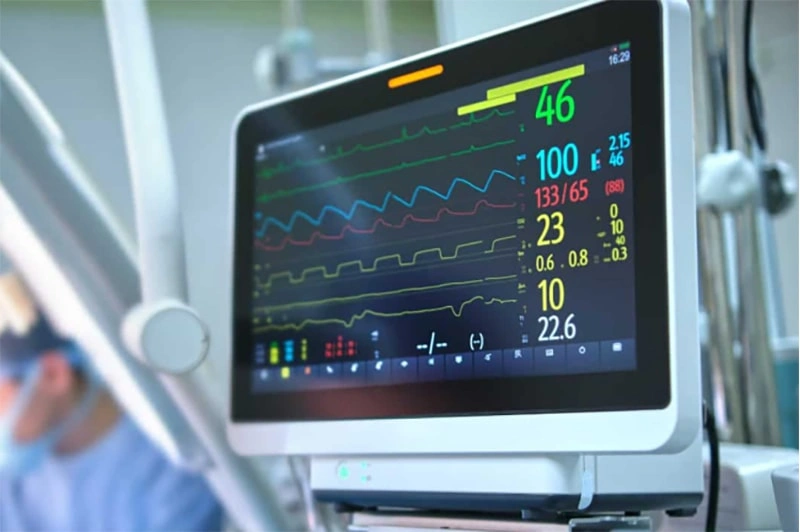
A diagnostic imaging system contains far more than its visible patient table, scanner housing, and control panel. Inside the equipment, insulating supports, positioning components, electrical barriers, and precision-machined parts help maintain the alignment, electrical separation, and mechanical stability required for reliable operation.
These components serve different purposes. An insulating bracket in an X-ray generator must withstand electrical stress, while a positioning block in an imaging system may be selected primarily for dimensional stability and mechanical strength.
YILONG manufactures glass-epoxy laminates, reinforced phenolic composites, engineering plastics, and custom CNC-machined components for medical equipment manufacturers. Material selection and manufacturing are based on the requirements of the specific device and component.
Where Composite Materials Are Used in Medical Equipment
MRI Systems and Patient Positioning Equipment
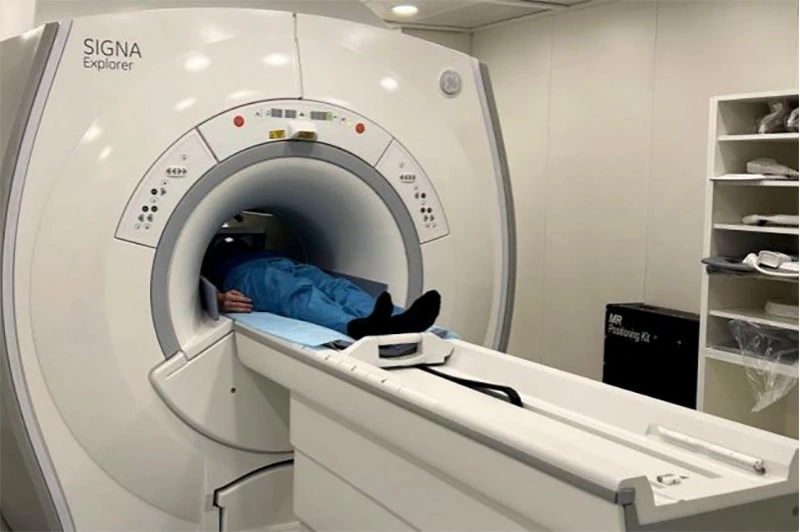
Magnetic resonance imaging (MRI) systems require careful control of materials used near the magnetic field and imaging region.
Non-ferromagnetic structural components may be used in patient positioning assemblies, equipment supports, mounting fixtures, and selected mechanical structures. Glass-epoxy laminates such as G10 (EPGC201) offer electrical insulation, mechanical strength, and dimensional stability for suitable applications.
However, non-magnetic behavior alone does not establish MRI compatibility. Components must also be evaluated for magnetic susceptibility, radiofrequency interaction, imaging artifacts, and their location within the MRI system.
For positioning assemblies, machining accuracy, load-bearing capacity, and stability under repeated movement are additional considerations.
X-Ray and CT Diagnostic Equipment
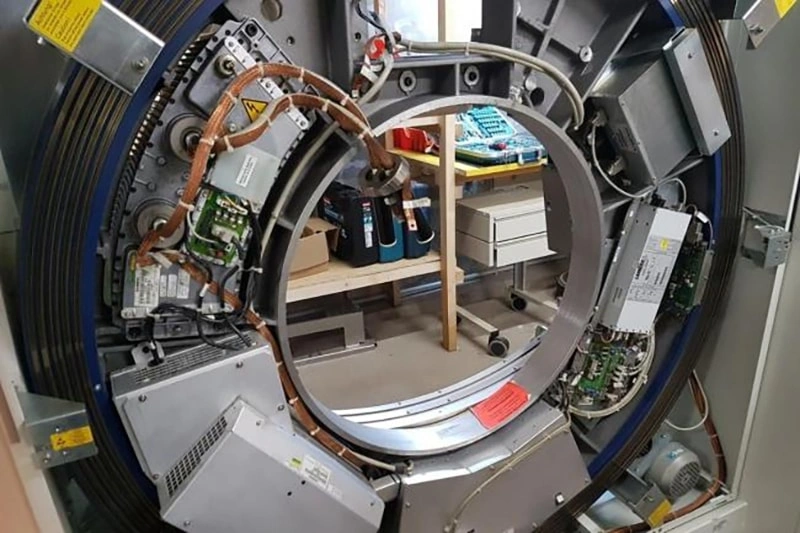
X-ray and computed tomography (CT) equipment combine high-voltage electrical systems with precisely aligned mechanical assemblies.
Electrical insulation components may include high-voltage terminal supports, insulating brackets, mounting plates, barriers, and spacers. FR4 (EPGC202), G10 (EPGC201), and selected high-temperature glass-epoxy laminates can be considered according to the electrical and mechanical requirements.
In high-voltage assemblies, dielectric strength is only one part of the design. Creepage distance, electrical clearance, surface condition, operating temperature, and insulation coordination must also be addressed.
Where components are located in or near the imaging path, X-ray attenuation and imaging artifacts require separate evaluation. A material suitable for electrical insulation is not automatically suitable for an X-ray-transparent component.
Laboratory Diagnostic and Analytical Instruments
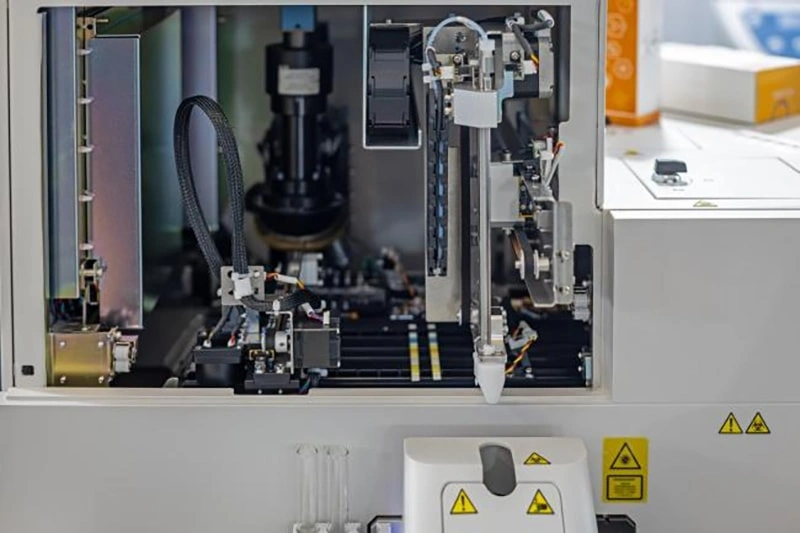
Clinical laboratory analyzers, automated testing systems, and analytical instruments contain compact assemblies where electrical insulation and precise mechanical positioning are often required.
Composite components may include circuit mounting plates, sensor supports, insulating spacers, guide blocks, and instrument fixtures.
FR4 and G10 provide rigid insulating structures for selected electrical and mechanical assemblies. Engineering plastics such as POM, PA, and PTFE may be considered for components requiring different friction, wear, or chemical-resistance characteristics.
For automated instruments, dimensional consistency and repeatable component positioning are particularly important. Material selection must also account for exposure to cleaning agents, reagents, and the temperatures encountered during operation.
Surgical and Dental Equipment
Surgical and dental equipment may require electrically insulating components, non-metallic supports, instrument fixtures, and precision-machined mechanical parts.
Glass-epoxy laminates and engineering plastics can be considered for selected non-patient-contact components, depending on their mechanical, electrical, and environmental requirements.
For example, insulating brackets may help separate electrical assemblies, while machined polymer components may serve as guides, spacers, or mounting elements.
Components exposed to repeated sterilization require special attention. Steam, chemical disinfectants, and other sterilization processes can affect material properties over time.
Biocompatibility, sterilization resistance, and suitability for patient contact must be established for the specific material and finished component. General industrial laminate grades should not be assumed to meet medical-device requirements without appropriate verification.
Medical Power Supplies and Electronic Control Systems
Medical equipment uses power supplies, transformers, control boards, and electrical distribution assemblies that require reliable insulation between conductive components.
Rigid insulating materials can be machined into terminal boards, electrical barriers, transformer supports, mounting brackets, and insulating spacers.
FR4 (EPGC202) provides electrical insulation with specified flame-retardant properties. GPO-3 (UPGM203) is another option for selected insulating supports and barriers where tracking resistance is important.
G11 (EPGC203) and FR5 (EPGC204) may be considered for components requiring improved thermal performance.
The finished assembly must be evaluated against applicable electrical safety requirements, including insulation coordination, temperature limits, and relevant medical electrical equipment standards.
Material Selection for Medical Equipment Components
Medical equipment contains both electrical and mechanical components. The appropriate material depends on where the part is installed and what function it performs.
|
Material |
Potential Medical Equipment Applications |
Main Selection Factors |
|
G10 / EPGC201 |
MRI equipment supports, positioning fixtures, insulating brackets |
Mechanical strength, dimensional stability, MRI compatibility where applicable |
|
FR4 / EPGC202 |
Electrical barriers, terminal plates, control system components |
Dielectric performance, flame resistance, mechanical strength |
|
GPO-3 / UPGM203 |
Power supply supports, insulating partitions, mounting panels |
Tracking resistance, electrical insulation, flame performance |
|
G11 / EPGC203 |
Heat-exposed electrical supports, equipment insulation components |
Thermal endurance, mechanical stability, dielectric properties |
|
FR5 / EPGC204 |
Flame-retardant, heat-resistant electrical insulation parts |
Thermal performance, flame resistance, electrical requirements |
|
Phenolic Laminates |
Selected equipment fixtures, spacers, and mechanical supports |
Mechanical properties, moisture sensitivity, dimensional stability |
|
POM, PA, PTFE, UHMWPE |
Guides, bushings, sliding components, precision spacers |
Friction, wear, creep, chemical exposure, cleaning compatibility |
These materials are not automatically interchangeable. A laminate suitable for an electrical barrier may be unsuitable for an imaging-path component, while a polymer selected for low friction may not provide the dimensional stability required for a precision support.
Material performance must be assessed under the actual operating and environmental conditions.
Precision CNC Machining for Medical Equipment Manufacturers
Medical equipment components frequently require tight dimensional control, consistent hole positioning, and reliable fit within complex assemblies.
YILONG manufactures custom components from electrical insulation laminates and engineering plastics according to customer drawings and specifications.
Our machining capabilities include CNC milling, drilling, cutting, turning, and custom profile machining.
Typical components include:
● Insulating mounting plates and electrical barriers
● Terminal supports and high-voltage spacers
● Positioning blocks and equipment fixtures
● Non-metallic brackets and structural supports
Precision bushings, guides, and mechanical spacers
For glass-fiber-reinforced laminates, machining parameters must account for abrasive reinforcement, edge quality, and the risk of delamination.
Component geometry also matters. Thin walls, closely spaced holes, sharp internal corners, and laminate orientation can influence mechanical performance and manufacturing feasibility.
For repeat production, customers can provide approved drawings, material specifications, dimensional tolerances, inspection requirements, and anticipated order quantities.
Medical Equipment Standards and Material Verification
Medical equipment manufacturers must consider both the properties of individual materials and the regulatory requirements of the finished device.
Depending on the application, relevant requirements may include:
● IEC 60601-1: General requirements for the basic safety and essential performance of medical electrical equipment.
● IEC 60893: Specifications for applicable rigid industrial laminated sheets.
● ISO 10993: Biological evaluation requirements where relevant to the nature and duration of body contact.
● Cleaning and sterilization validation: Verification of material performance under the intended cleaning or sterilization process.
Compliance with a material standard does not automatically establish compliance with medical-device regulations.
Likewise, the use of an electrically insulating or non-ferromagnetic material does not independently establish patient-contact suitability, MRI compatibility, or approval for use in a medical device.
Required testing, traceability, documentation, and qualification should be defined by the medical equipment manufacturer according to the intended application.
Medical Equipment Composite Solutions from YILONG
YILONG supplies electrical insulation laminates, reinforced phenolic composites, engineering plastics, and CNC-machined components for equipment manufacturers.
Our capabilities cover standard sheets, rods, tubes, and custom parts manufactured according to technical drawings.
For medical equipment projects, we can review material grades, component dimensions, operating conditions, manufacturing tolerances, and inspection requirements to support the selection and production of suitable components.
Whether you require insulating brackets for diagnostic equipment, electrical supports for power assemblies, or precision-machined components for laboratory instruments, YILONG can provide material and manufacturing options for technical evaluation.
Looking for electrical insulation materials or custom composite components for medical equipment?
Contact YILONG with your drawings, material specifications, required quantities, and application details to request a quotation.
 |
 |
 |
| Medical Equipment | Healthcare Equipment | Laboratory Equipment |
G10 and FR4 may be considered for selected non-ferromagnetic insulating and structural components. However, MRI compatibility must be verified for the specific material, component, and installation location.
G10, FR4, G11, and other insulating laminates may be used for selected electrical supports, brackets, and high-voltage spacers. Components in the imaging path require additional evaluation of X-ray attenuation and imaging artifacts.
Not all grades are suitable for repeated sterilization. Compatibility depends on the sterilization method, temperature, chemical exposure, and number of cycles. Application-specific testing is required.
Biocompatibility cannot be assumed from the material name or general industrial properties. Patient-contact applications require appropriate biological evaluation and documentation for the intended use.
FR4, GPO-3, G11, and FR5 are potential choices for insulating supports, barriers, and electrical assemblies. Selection depends on voltage, operating temperature, mechanical requirements, and applicable equipment safety standards.
Key factors include dielectric strength, creepage distance, electrical clearance, thermal stability, and flame resistance. Material selection must also consider the equipment's operating voltage, environmental conditions, and applicable medical electrical safety standards, such as IEC 60601-1.

No.3, Mianzhi Street, Zhucheng, Shandong, China


Copyright © 2026 by Qingdao Yilong Insulation Material Company Limited All Rights Reserved


