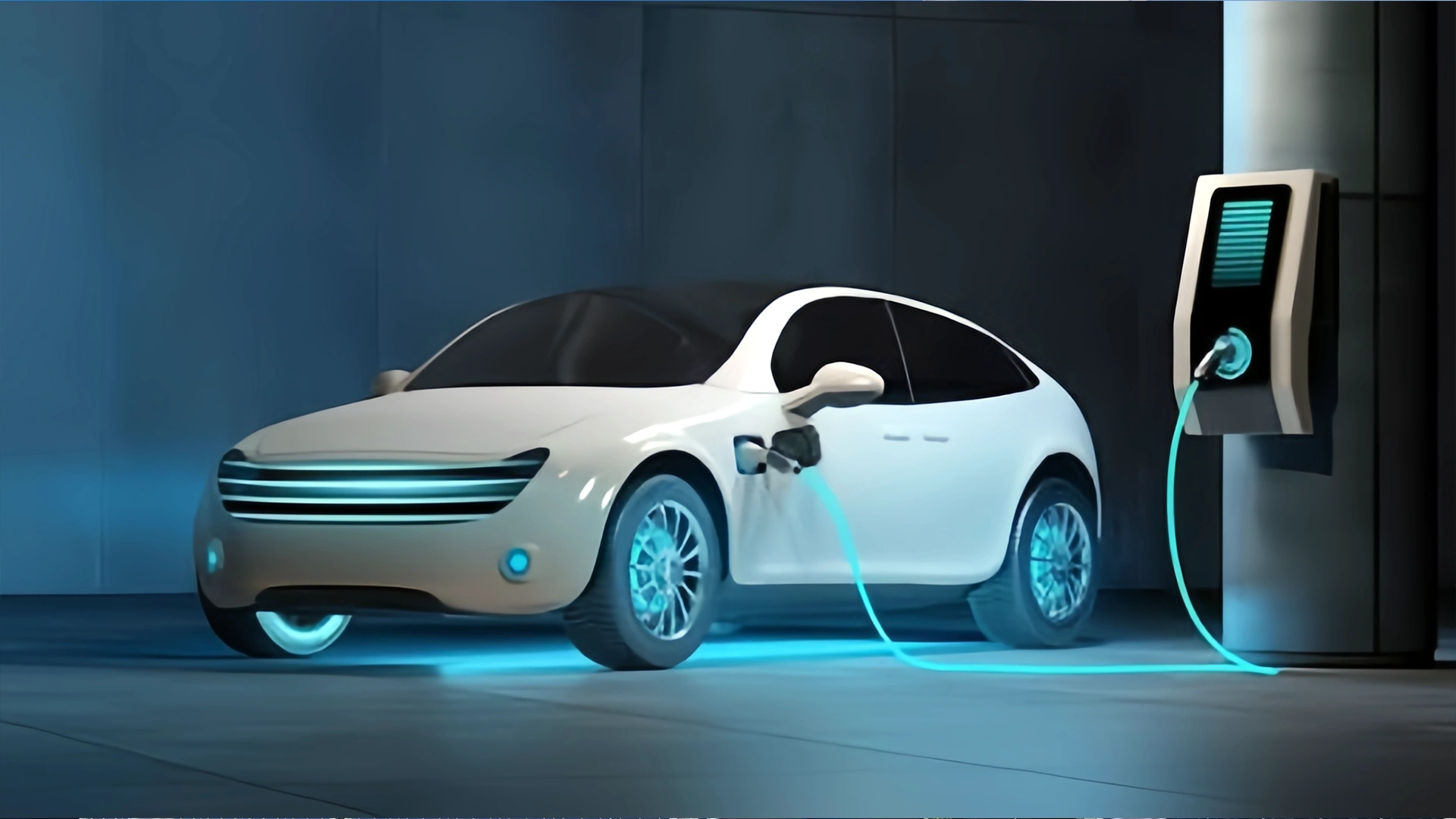
The electrification of modern vehicles has introduced increasingly complex high-voltage systems, electric drive units and power electronics, creating demanding requirements for electrical insulation and component reliability. In electric vehicles, EV motors, automotive electronics and charging systems, YILONG insulation materials help maintain electrical isolation while withstanding vibration, heat, mechanical stress and continuous electrical operation. Typical applications include motor insulation components, inverter and power-electronics insulation, battery system components, busbar insulation, electrical barriers and charging equipment components, with materials available for precision machining to meet specific dimensional, mechanical and electrical requirements.
Thermoset Materials for Vehicle Electrification and Automotive Equipment
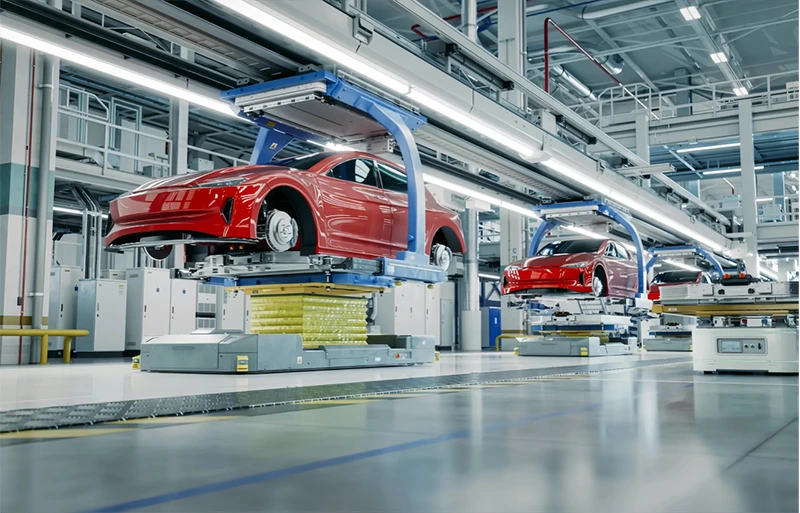
Vehicle electrification places increasingly demanding requirements on electrical insulation. Battery-electric and hybrid vehicles integrate high-voltage battery systems, electric drive motors, inverters, power distribution units and charging components within compact assemblies exposed to heat, vibration and changing environmental conditions.
In these systems, insulating components do more than separate conductive parts. They may also support busbars, secure electrical assemblies, maintain dimensional stability and withstand mechanical loads throughout vehicle operation.
YILONG manufactures glass-epoxy laminates, polyester-glass composites, high-temperature insulating materials and precision-machined components for automotive electrical and industrial applications.
Our material and machining capabilities support component manufacturers developing insulation solutions for electric mobility, power electronics and automotive production equipment.
Electrical Insulation Challenges in Modern Vehicles
High-Voltage Safety and Insulation Coordination
Electric vehicle electrical systems require reliable separation between high-voltage conductors, accessible structures and adjacent components.
Insulating barriers, support blocks and mounting plates help maintain the physical separation required by the electrical design.
However, material dielectric strength alone cannot determine whether an insulating component is suitable for a particular vehicle voltage.
Working voltage, transient overvoltages, insulation resistance, creepage and clearance distances, contamination and component geometry must also be evaluated.
Tracking resistance is particularly relevant where surface contamination and moisture could affect insulation performance. A material's Comparative Tracking Index (CTI) provides useful information for insulation coordination, but it is not a voltage rating for the finished component.
Thermal Ageing and Repeated Temperature Cycling
Electric drive systems and power electronics generate heat during operation. Insulating components positioned near motors, busbars and switching devices may experience elevated temperatures and repeated heating and cooling.
These conditions can affect resin properties, dimensional stability and the retention of mechanical and electrical performance.
A laminate's glass transition temperature (Tg) should not be confused with its long-term operating temperature.
Material selection must consider actual component temperatures, thermal endurance data and the performance required after ageing.
Vibration, Fastening Loads and Mechanical Fatigue
Vehicle components are subjected to vibration, acceleration, mechanical shock and repeated loading.
Structural insulation parts may also carry bolt preload or support heavy electrical assemblies.
Glass-fiber-reinforced thermoset laminates offer combinations of stiffness, mechanical strength and electrical insulation. Their directional properties must nevertheless be considered during component design.
For machined spacers and mounting plates, hole placement, edge distances, laminate orientation and local stress concentrations can influence service reliability.
Moisture, Contamination and Automotive Fluids
Automotive electrical components may encounter humidity, condensation, road salt and temperature fluctuations.
Depending on their installation location, they may also be exposed to coolants, oils or cleaning chemicals.
Environmental resistance varies by resin system and material grade. Compatibility should be assessed using the actual fluids, temperatures and exposure conditions rather than assuming all composite materials perform alike.
Applications in Electric and Hybrid Vehicles
EV Battery Packs and High-Voltage Distribution
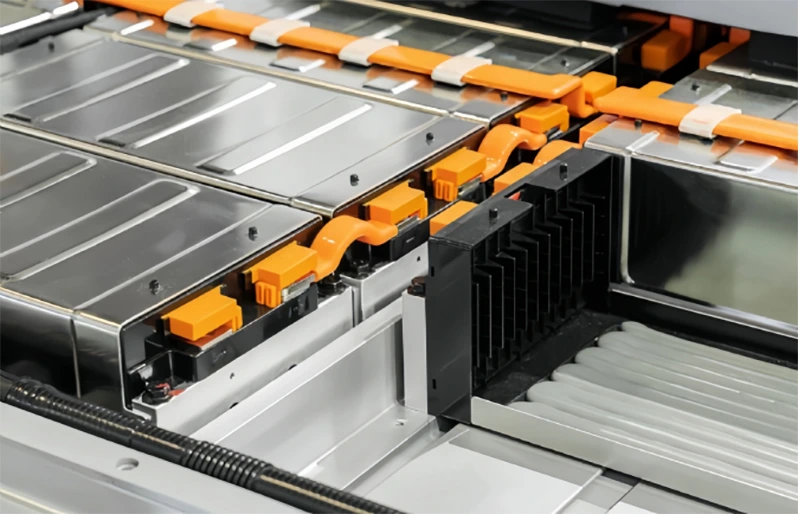
Electric vehicle battery assemblies contain interconnected cells, modules, conductors, sensing components and protective systems.
Electrical insulating components help separate conductive structures, support electrical connections and maintain the positioning of selected assemblies.
Potential applications for suitable thermoset composites include:
● Busbar supports and insulating spacers
● Mounting plates and electrical barriers
● Terminal support components
● Custom structural insulation parts
Glass-epoxy and polyester-glass laminates can be evaluated for these functions where their mechanical, dielectric and thermal properties meet the design requirements.
Battery pack components must also be assessed against vibration, mechanical loading, environmental exposure and relevant safety requirements.
A material's UL 94 flame classification does not, by itself, demonstrate protection against battery thermal runaway or compliance with a complete battery safety standard.
Electric Drive Motors and Traction Systems
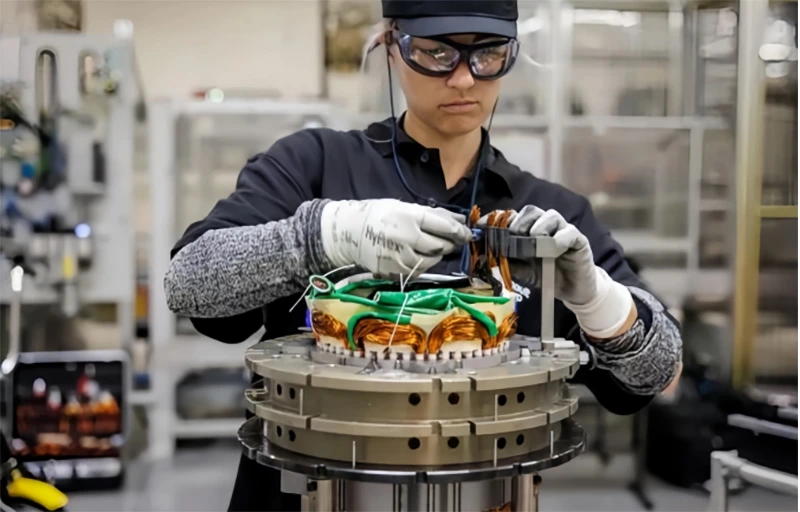
Electric traction motors operate under combined electrical, thermal and mechanical stresses.
Their insulation systems must maintain electrical separation while withstanding vibration, electromagnetic forces and repeated temperature changes.
Glass-epoxy laminates can be used in selected motor insulation components, including slot wedges, spacers, support pieces and terminal insulation structures.
For higher-temperature applications, suitable G11, FR5 and specialized EPGC grades provide alternatives to conventional glass-epoxy materials.
Mica-based materials are also used in certain motor winding insulation systems where their dielectric and thermal characteristics are required.
The appropriate insulation construction depends on motor design, temperature conditions, electrical stress and applicable qualification requirements.
Inverters, Onboard Chargers and DC-DC Converters
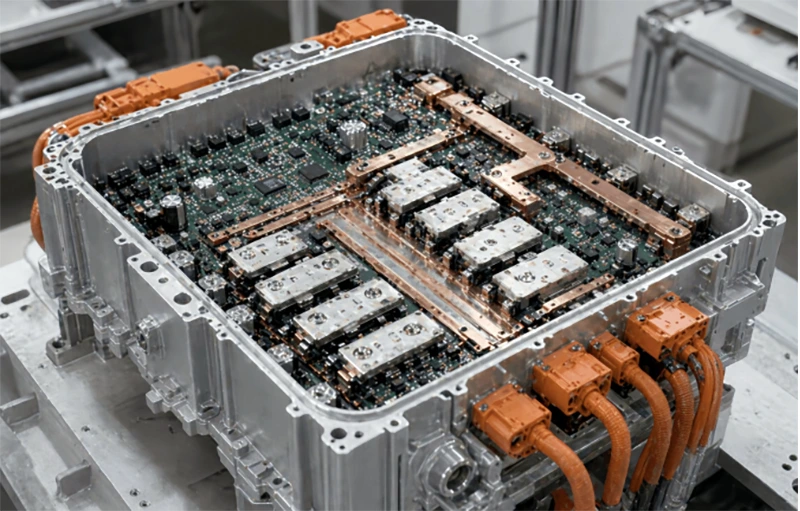
Power electronic systems convert and regulate electrical energy between the battery, electric drive motor and auxiliary vehicle systems.
These assemblies contain closely spaced conductors and heat-generating components, creating demanding conditions for electrical insulation.
Thermoset composite materials can be considered for insulating barriers, mounting plates, support blocks and busbar insulation structures.
FR4 and GPO-3 are potential options for selected structural insulation applications. Where higher temperature capability or tracking resistance is required, specialized grades may be considered.
Material evaluation should account for repetitive voltage pulses, localized heating, electric-field distribution and the mechanical design of the finished assembly.
High-Voltage Junction Boxes and Electrical Distribution Units
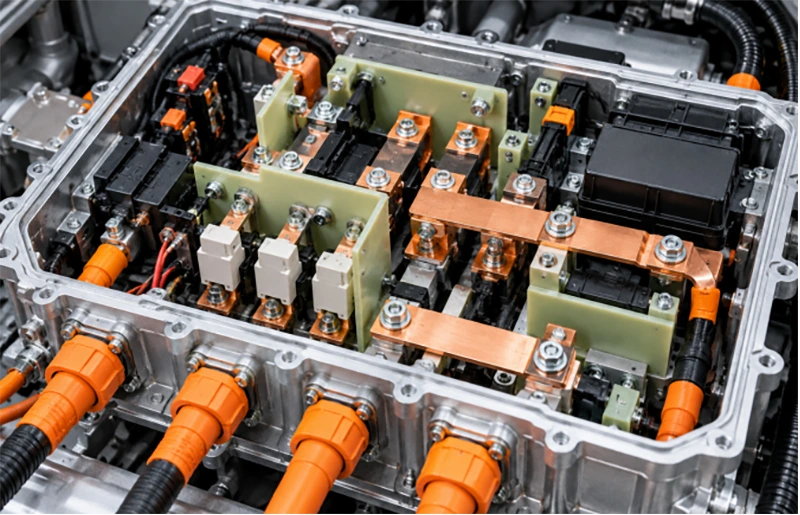
High-voltage junction boxes and power distribution units connect and protect electrical circuits within the vehicle.
Insulating components may be required to support conductors, maintain separation between electrical connections and secure internal assemblies.
Glass-epoxy and polyester-glass laminates offer useful combinations of mechanical rigidity, electrical insulation and machinability for selected applications.
Custom-machined components can incorporate mounting holes, slots and complex profiles according to the assembly design.
Their suitability must be confirmed against the specified electrical, thermal and environmental requirements.
Material Selection for EV High-Voltage and Electric Drive Components
In electric vehicles, insulation material selection is closely linked to component design. A busbar support in a high-voltage distribution unit faces different operating stresses from a slot wedge in a traction motor or a mounting plate inside an inverter.
Although these components may use similar thermoset materials, their performance requirements differ significantly. Electrical stress, operating temperature, mechanical loading and the direction of reinforcement all influence material suitability.
● G10 and FR4: Structural Insulation for High-Voltage Assemblies
In high-voltage junction boxes, power distribution units and inverter assemblies, insulating components often perform two functions simultaneously: maintaining electrical separation and providing mechanical support.
G10 and FR4 glass-epoxy laminates are useful where components require rigidity, dimensional accuracy and resistance to mechanical deformation.
Their woven glass reinforcement provides mechanical strength, but laminate properties are directional. For components with bolted connections, designers must consider compressive loading, hole geometry and stresses acting through the laminate thickness.
FR4 also offers flame-retardant characteristics, making it relevant where the specified material flame classification is required.
Typical components: Busbar mounting plates, insulating spacers, terminal supports and CNC-machined structural insulation parts.
● G11 and FR5: Managing Thermal Stress in Electric Drive Systems
Traction motors and automotive power electronics operate under changing electrical loads that generate heat and repeated temperature fluctuations.
For insulating components located near motor windings or heat-generating electrical assemblies, maintaining mechanical and dielectric properties at elevated temperatures can be more important than room-temperature strength.
G11 and FR5 are high-temperature glass-epoxy laminate families that offer alternatives to conventional G10 and FR4.
G11 is commonly selected where elevated-temperature mechanical and electrical performance is required. FR5 combines high-temperature epoxy-glass construction with flame-retardant characteristics.
Their actual thermal endurance depends on the specific grade and should be verified against the component's operating temperature and required service life.
Typical components: Motor slot wedges, winding support components, high-temperature spacers and structural insulation near power electronics.
● GPO-3: Tracking-Resistant Insulation for Electrical Distribution
In electrical distribution assemblies, insulation performance can be affected by moisture, surface contamination and the geometry of closely spaced conductors.
GPO-3 (UPGM203) is particularly relevant where electrical tracking resistance and flame-retardant performance are important design considerations.
Its polyester resin and glass-mat construction differs from the woven glass-epoxy structure of FR4. As a result, the two materials should not be treated as mechanically equivalent.
GPO-3 may be suitable for insulating barriers and support components where its electrical characteristics meet the design requirements and the mechanical loading is compatible with the selected grade.
For compact high-voltage assemblies, tracking resistance must still be evaluated alongside creepage distance, clearance and the applicable insulation coordination requirements.
Typical components: Electrical barriers, terminal support plates, insulating partitions and selected high-voltage distribution components.
● Mica: Electrical Insulation in High-Temperature Motor Systems
Mica-based insulation serves a different function from rigid structural laminates.
In electric motor insulation systems, mica is valued for its dielectric characteristics and ability to withstand elevated temperatures. Depending on the product construction, it can be incorporated into winding insulation systems or used in specialized insulating components.
Mica tapes, sheets and other constructions differ substantially in flexibility, mechanical strength, binder content and thermal performance.
Consequently, a mica sheet intended for a rigid component cannot automatically replace a mica tape designed for winding insulation.
Typical applications: Selected traction motor winding insulation systems and specialized high-temperature electrical insulation components.
● Phenolic Laminates and Engineering Plastics: Mechanical and Auxiliary Components
Not every insulating component in automotive equipment requires a high-temperature glass-epoxy laminate.
Phenolic cotton laminates can be considered for selected wear-resistant parts, guides and mechanical components where their friction and strength characteristics are appropriate.
Engineering plastics such as POM, PA and PEEK offer additional options for machined components requiring specific combinations of wear resistance, dimensional stability, chemical compatibility or temperature performance.
Their suitability depends on the mechanical and environmental demands of the application. These materials should not be assumed to provide equivalent high-voltage insulation performance without relevant electrical verification.
Typical components: Equipment guides, bushings, wear parts and auxiliary mechanical components used in automotive manufacturing systems.
Beyond the Vehicle: Automotive Manufacturing Equipment
Automotive production facilities rely on automated machinery, electrical controls and precision tooling.
In assembly lines, machining equipment and industrial automation systems, composite materials may be used for electrical isolation, equipment mounting, wear-resistant components and nonmetallic tooling parts.
Phenolic laminates, glass-epoxy composites and engineering plastics offer different combinations of mechanical strength, machinability, friction behavior and electrical insulation.
YILONG manufactures custom composite components for industrial equipment according to customer drawings and agreed specifications.
This capability supports automotive equipment manufacturers and tooling suppliers as well as developers of vehicle electrical assemblies.
Precision Manufacturing for Automotive Insulation Components
Automotive electrical insulation components require accurate machining, consistent material quality and reliable assembly fit. For glass-epoxy and polyester-glass laminates, particular attention is given to mounting holes, laminate orientation, edge integrity and features subjected to mechanical loading.
YILONG combines in-house thermoset laminate production with advanced CNC machines to manufacture custom insulating spacers, busbar supports, mounting plates and other electrical components to customer drawings.
Material specifications, critical tolerances and inspection requirements are reviewed before production. Where required, batch traceability, first article inspection and customer-specific approval documentation can be evaluated during project planning.
Custom Insulation Components for Automotive Applications
We provide thermoset materials and precision-machined electrical insulation components for EV high-voltage distribution, power electronics, electric drive systems and automotive manufacturing equipment.
Share your drawings, material specifications and operating requirements with our team to discuss manufacturing feasibility and suitable material options.
 |
 |
 |
 |
| Electric Vehicles | EV Motors | Automotive Electronics | Charging Systems |
systems must withstand. Existing insulating components cannot be approved simply because their material has a high dielectric strength.
Engineers must reassess working voltage, transient overvoltages, creepage and clearance distances, insulation coordination and the geometry of conductive parts.
Higher voltage can also increase the importance of electric-field concentration around busbar edges, fasteners and interfaces between different materials.
For insulating barriers and support components, material selection should be evaluated together with the complete high-voltage assembly rather than independently of its design.
Glass-epoxy laminates are reinforced materials with direction-dependent mechanical properties. Although they provide high stiffness and strength, localized loading can create stresses between laminate layers.
Common contributing factors include excessive bolt preload, insufficient edge distance, unsuitable hole geometry, thermal expansion differences between metal and composite parts, and vibration.
These conditions may initiate cracking, crushing or interlaminar separation, particularly where the component is constrained by rigid metal hardware.
Design review should consider laminate orientation, fastening conditions, operating temperature and the distribution of mechanical loads. Machining quality and dimensional consistency are also important.
No. A high glass transition temperature (Tg) does not automatically make FR4 equivalent to G11 or FR5.
Tg describes a transition in the resin's mechanical behavior, while long-term thermal endurance depends on how the material retains its electrical and mechanical properties during prolonged exposure to heat.
G11, FR5 and specialized epoxy-glass grades may differ in resin chemistry, thermal endurance, flame behavior and electrical performance.
For traction motor components such as slot wedges and structural spacers, engineers should compare the relevant thermal endurance, mechanical strength and electrical test data rather than selecting materials by Tg alone.
GPO-3 may be a suitable alternative for certain insulating barriers, mounting plates and support components, but it is not a universal replacement for FR4.
The two materials use different resin and reinforcement systems. FR4 typically uses woven glass fabric with epoxy resin, while GPO-3 uses glass-mat reinforcement with polyester resin.
These differences influence mechanical properties, machining behavior, dimensional performance and electrical characteristics.
Selection should consider tracking resistance, dielectric properties, flame classification, mechanical loading, component thickness and the actual operating environment.
Where the component carries significant structural loads or requires tight dimensional tolerances, application-specific mechanical evaluation is particularly important.
No. UL 94 V-0 describes the burning behavior of material specimens under specified test conditions. It does not demonstrate that the material can prevent thermal runaway propagation in a battery pack.
A thermal runaway event can expose nearby components to intense heat, hot gases, pressure and particle impact.
Materials intended for thermal propagation barriers or battery enclosure protection require evaluation against the relevant thermal and mechanical hazards.
Standards and test methods such as UL 2580 and UL 2596 address different aspects of EV battery and battery enclosure safety.
Conventional glass-epoxy or polyester-glass insulating components should not be described as thermal runaway barriers without appropriate application-specific validation.
Initial material properties are only part of the evaluation.
Automotive electrical components may experience repeated thermal cycling, vibration, humidity, mechanical loading and exposure to automotive fluids. These stresses can influence insulation resistance, dimensional stability and mechanical performance over time.
Depending on the application, qualification may involve thermal ageing, temperature cycling, moisture conditioning, vibration testing, dielectric testing and mechanical evaluation before and after environmental exposure.
Acceptance criteria should be established according to the component's function and the relevant OEM or Tier 1 requirements.
A single room-temperature dielectric strength result is not sufficient to establish long-term automotive reliability.
Dielectric strength is commonly reported in kV/mm, but values obtained from different materials or test methods are not necessarily directly comparable.
Measured results can be affected by specimen thickness, electrode configuration, conditioning, temperature, voltage application method and material defects.
The relationship between breakdown voltage and thickness is not always linear.
For this reason, engineers should not calculate the guaranteed withstand voltage of a finished component simply by multiplying a published dielectric strength value by its thickness.
Actual insulation performance must be evaluated using the applicable test method, component geometry and electrical design requirements.

No.3, Mianzhi Street, Zhucheng, Shandong, China


Copyright © 2026 by Qingdao Yilong Insulation Material Company Limited All Rights Reserved


