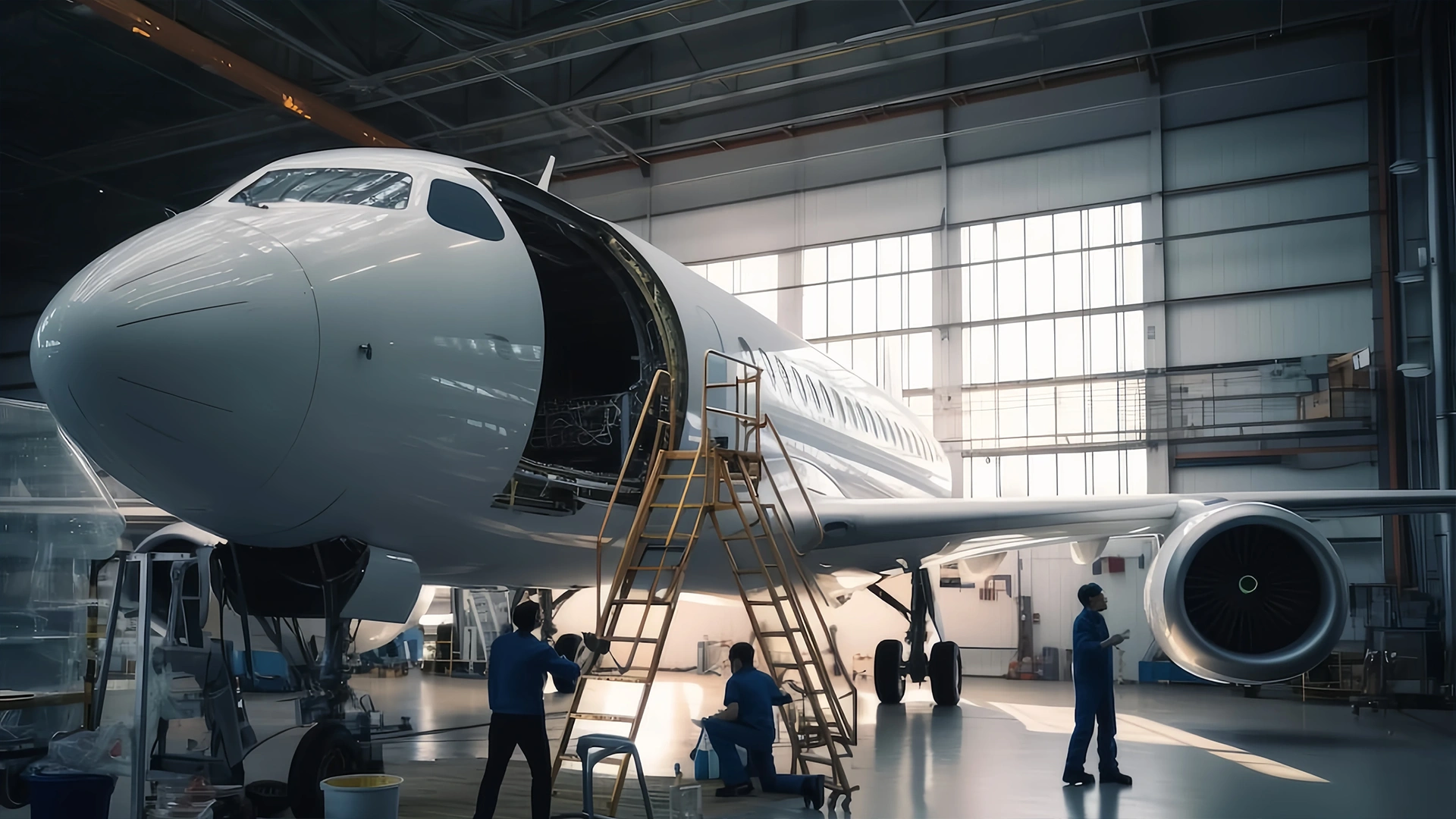
Aerospace and aviation systems demand materials that combine low weight, electrical insulation, mechanical strength, thermal stability and dimensional precision while maintaining reliable performance under vibration, temperature changes and other demanding operating conditions. In aircraft, aerospace equipment, avionics and electrical systems, insulating composite materials can support electrical isolation, component mounting and structural reinforcement in critical assemblies. Depending on the equipment and design requirements, typical applications include terminal insulation components, electrical barriers, structural supports, connector components, insulating sleeves and precision-machined parts, with material selection based on the required electrical, mechanical, thermal and dimensional performance.
Aerospace & Aviation
An insulating component in an aircraft electrical assembly and a similar-looking part in a satellite may serve the same basic purpose, yet face entirely different engineering constraints. Aircraft equipment must account for vibration, repeated operating cycles, and installation-specific fire-safety requirements. Spacecraft hardware introduces other concerns, including vacuum outgassing, thermal extremes, and contamination-sensitive equipment.
These differences influence how nonmetallic materials are selected and where they can be used. In aviation, glass-epoxy laminates may serve as rigid insulating supports, spacers, or components within electrical assemblies and maintenance fixtures. In space-related systems, specialized composite grades may also be considered for thermal isolation, cryogenic supports, and electrically insulating structures—but only where their performance has been established for the intended environment.
Aviation: Electrical Insulation and Composite Components for Aircraft Systems
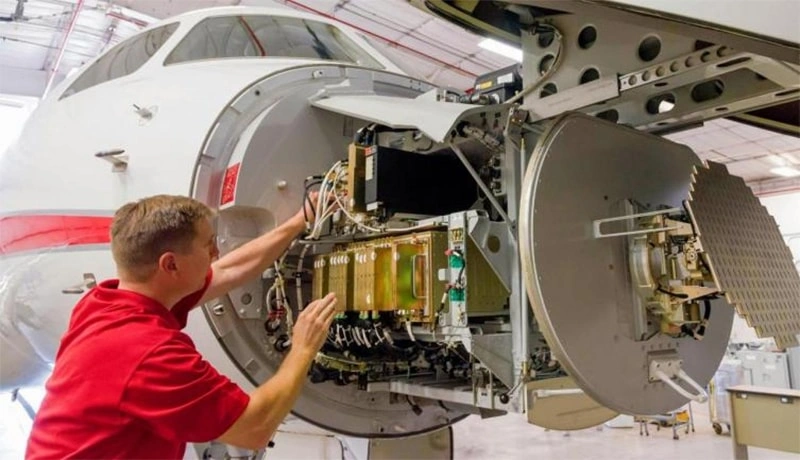
In aviation, nonmetallic materials are selected not only for their electrical properties but also for their ability to perform reliably within compact, mechanically demanding assemblies.
A material suitable for an aircraft maintenance fixture is not automatically qualified for installation on an aircraft. This distinction affects material selection, inspection, documentation, and acceptance testing.
Electrical Insulation in Aircraft Equipment
Aircraft electrical and electronic equipment may require rigid insulating components to separate conductive parts, support electrical connections, and maintain the position of equipment within an assembly.
Depending on the equipment design, glass-epoxy laminates may be considered for:
● Insulating mounting plates and terminal supports
● Nonconductive spacers and sleeves
● Electrical equipment support blocks
● Rigid insulating brackets and structural separators
G10 and FR4 provide a combination of electrical insulation and mechanical rigidity. G11 and suitable higher-temperature grades may be considered where elevated-temperature property retention is important.
However, material selection cannot rely on dielectric strength alone.
The finished component's electrical performance depends on its geometry, surface condition, insulation thickness, and the separation between conductive parts. Machined holes, slots, exposed laminate edges, and metallic fasteners can affect the insulation arrangement.
Engineers must therefore evaluate creepage, clearance, operating voltage, environmental exposure, and applicable electrical test requirements at the assembly level.
Insulating Components in Aircraft Motors and Electro-mechanical Equipment
Aircraft electromechanical systems may include motors, actuators, generators, and associated electrical equipment. Some designs require rigid insulating components capable of supporting mechanical loads while maintaining electrical separation.
Potential applications for suitable glass-epoxy grades include rigid winding supports, insulating spacers, terminal mounting components, and selected motor insulation structures.
In these applications, temperature is only one part of the operating environment.
A rigid support may experience vibration, electromagnetic forces, thermal cycling, and sustained compression. Its mechanical properties at operating temperature can be more relevant than room-temperature strength.
For motor insulation, individual material properties must also be considered within the complete insulation system. A laminate with a higher thermal rating does not independently establish the service life or qualification of the motor assembly.
Aircraft Maintenance, Assembly, and Inspection Fixtures
Ground-based aviation maintenance and manufacturing equipment presents a different set of material requirements from flight hardware.
Precision-machined G10/FR4 components may be useful within electrical test fixtures, inspection tooling, assembly supports, and nonconductive positioning devices.
Examples include insulating fixture plates, locating blocks, equipment holders, and machined spacers.
These components may need accurate hole positions, controlled flatness, dimensional stability, and resistance to repeated handling.
The choice between glass-epoxy laminates and engineering plastics depends on the fixture's function. Glass-epoxy laminates can provide rigid electrical insulation, while materials such as POM or suitable bearing polymers may be preferable where repeated sliding contact and low friction are required.
For fixtures involving repeated clamping, designers should consider local compression, hole-edge stresses, and possible wear at contact surfaces.
Vibration, Fasteners, and Thermal Cycling
Aviation equipment can experience mechanical vibration and changing temperatures. These conditions can affect composite components even when their nominal strength exceeds the calculated static load.
For example, a bolted glass-epoxy spacer may be subjected to sustained clamping force while adjacent metal components expand and contract at different rates.
The resulting changes in joint loading can influence alignment, preload retention, and local stresses around mounting holes.
Design reviews should therefore consider:
● Load direction relative to the laminate layers
● Bearing stress around fasteners
● Through-thickness compression
● Differential thermal expansion
● Vibration and repeated loading
● Edge quality and machining-induced damage
Where these factors are critical, testing the actual component or representative assembly may provide more useful evidence than relying solely on standard material-property values.
Aerospace: Insulation Materials for Spacecraft and Extreme Environments

Spacecraft and space-related equipment introduce material-selection problems that may not occur in conventional industrial machinery.
Vacuum exposure, contamination sensitivity, extreme thermal environments, radiation, and stringent mass or dimensional constraints can significantly influence material performance.
Not every aerospace application experiences all these conditions. Ground-based space testing equipment, for example, may have different requirements from hardware installed on a spacecraft.
Electrical Insulation and Structural Supports in Space Equipment
Spacecraft electrical assemblies may require nonconductive supports, insulating spacers, and rigid mounting components.
Glass-epoxy laminates can provide electrical insulation and structural rigidity, but their suitability depends on the exact material formulation and mission environment.
In vacuum, electrical insulation design requires particular attention. Conventional assumptions about air insulation, surface discharge, and dielectric performance may not apply across all pressure conditions.
Designers must consider the operating voltage, pressure environment, component geometry, contamination, and relevant electrical qualification tests.
A material's dielectric-strength value under standard laboratory conditions does not establish the performance of a spacecraft electrical assembly.
Vacuum Out-gassing and Contamination Control
Polymeric materials can release volatile substances when exposed to vacuum and elevated temperatures.
In spacecraft, these substances may condense on sensitive surfaces, including optical elements, detectors, and thermal-control components.
For this reason, space programs may require outgassing evaluation using methods such as ASTM E595 or ECSS-Q-ST-70-02.
Two commonly reported measurements are:
Total Mass Loss (TML): the percentage of specimen mass lost under specified test conditions.
Collected Volatile Condensable Material (CVCM): the percentage of released material collected on a controlled-temperature surface.
These results are useful for material screening, but acceptance criteria depend on the mission and the component's location.
Standard commercial G10, FR4, or G11 should not be described as space-qualified or low-outgassing without supporting grade-specific evidence.
Cryogenic Insulating Supports
Cryogenic systems may require components that combine mechanical strength with reduced heat transfer.
Glass-fiber-reinforced composites are among the materials considered for structural thermal isolation because they can provide load-bearing capability with lower thermal conductivity than many metals.
The design challenge is to reduce heat leakage without sacrificing structural performance.
For a support carrying a specified load, reducing its cross-sectional area may decrease conductive heat transfer but increase stress and deflection. Increasing its length may reduce heat flow while introducing stiffness or buckling concerns.
The appropriate design therefore depends on both thermal and mechanical calculations.
At cryogenic temperatures, additional factors become important:
● Strength and stiffness at the specified temperature
● Thermal contraction relative to adjacent materials
● Thermal conductivity across the actual temperature range
● Resistance to thermal cycling
● Behavior of bolted or bonded joints
Specially formulated cryogenic glass-epoxy grades may be suitable for certain applications. Ordinary industrial G10 and cryogenic-qualified G10 variants should not be assumed equivalent.
Dimensional Stability Under Extreme Temperature Changes
Space-related equipment may experience substantial temperature changes, depending on its location and thermal-control design.
Different materials expand and contract at different rates. In assemblies combining metals and reinforced polymers, this can produce stress at fasteners, interfaces, and constrained mounting points.
Glass-epoxy laminates also exhibit direction-dependent thermal and mechanical behavior.
For precision supports and mounting components, engineers should evaluate dimensional changes along the relevant material directions rather than relying on a single generalized thermal-expansion value.
Where alignment is critical, thermal cycling tests may be required to verify that the assembled component maintains its intended geometry.
Material Selection for Aerospace & Aviation Applications
The choice of material should begin with the component's function and qualification requirements, not with a general claim that one composite is stronger, lighter, or more heat-resistant than another.
|
Material |
Engineering characteristics |
Potential applications |
|
G10 / EPGC201 |
Rigid electrical insulation, mechanical strength, machinability |
Insulating supports, spacers, mounting plates, ground-test fixtures |
|
FR4 / EPGC202 |
Glass-epoxy laminate with flame-retardant formulation |
Electrical mounting components and insulating structures where the grade meets the specified requirements |
|
G11 / EPGC203 |
Improved elevated-temperature property retention compared with conventional G10 grades |
Higher-temperature rigid insulation and structural supports |
|
FR5 / EPGC204 |
Higher-temperature glass-epoxy laminate with flame-retardant properties |
Selected electrical insulation components requiring both characteristics |
|
Phenolic laminates |
Grade-dependent electrical and mechanical performance |
Selected tooling, supports, and mechanical components |
|
PEEK and other engineering plastics |
Grade-dependent thermal, chemical, and mechanical properties |
Precision parts and specialized equipment components |
These are possible engineering applications, not evidence of approval for aircraft or spacecraft installation.
What Must Be Verified Before an Aerospace Material Is Approved?
Aircraft Fire-Safety Requirements
Certain aircraft interior materials are subject to flammability requirements under 14 CFR §25.853 and the applicable tests in Appendix F.
These requirements are not interchangeable with UL 94 V-0.
A flame-retardant industrial laminate should not be represented as compliant with aircraft interior requirements unless the appropriate tests and approval documentation support that claim.
Spacecraft Environmental Requirements
Space-related hardware may require evidence of vacuum compatibility, outgassing behavior, thermal cycling performance, radiation resistance, and other environmental characteristics.
The required tests depend on the mission and the component's intended location.
A generic material data sheet does not establish suitability for all spacecraft environments.
Material Traceability and Inspection
Aerospace-related procurement may require controlled material identification, batch traceability, dimensional inspection, and documented acceptance criteria.
Depending on the project, additional requirements may include first-article inspection, process controls, environmental testing, or customer-specific approval procedures.
These requirements should be established before manufacturing begins.
ISO 9001 certification alone does not establish AS9100 certification or approval to manufacture flight-critical hardware.
Precision Machining and Component Manufacturing
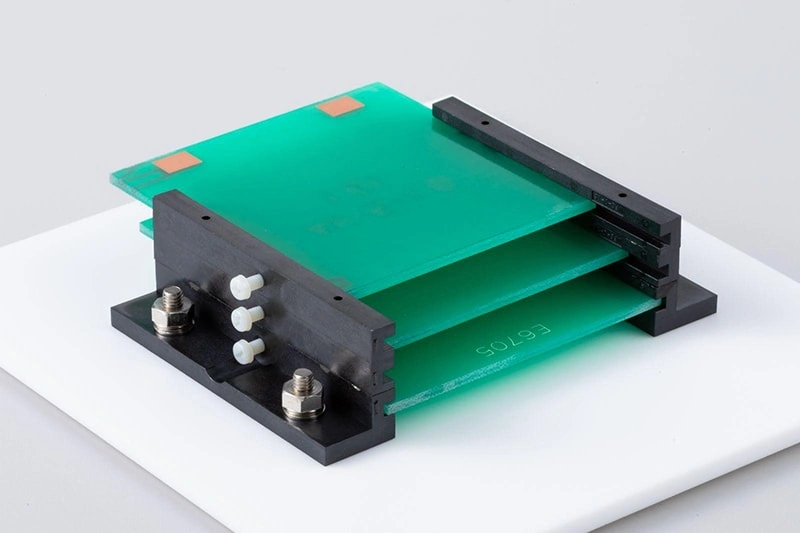
YILONG manufactures glass-epoxy and phenolic laminates in semi-finished forms and produces CNC-machined insulation components according to customer drawings.
For aerospace-related projects, manufacturing feasibility depends on the specified material, component geometry, tolerances, quantity, and inspection requirements.
Glass-epoxy laminates require particular attention during machining because exposed glass fibers, edge chipping, delamination, and laminate orientation can influence finished-part quality.
Critical dimensions, hole positions, surface requirements, and acceptable edge conditions should be defined on the engineering drawing.
Where special material qualification or aerospace-specific documentation is required, its availability and scope must be confirmed before an order is accepted.
 |
 |
 |
 |
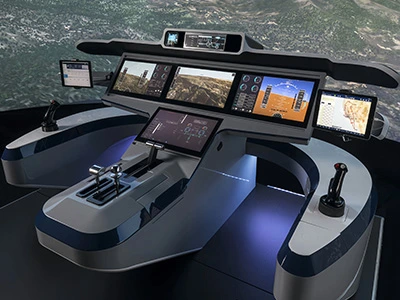
| Aircraft | Aerospace | Avionics | Electrical Systems |
Not solely on the basis of its material designation. Standard G10 and FR4 may provide useful electrical and mechanical properties, but installation in aircraft or spacecraft can require additional testing, documentation, and approval. The requirements depend on the component's function and applicable project specification.
No. UL 94 and aircraft fire-safety requirements use different test methods and acceptance criteria. Compliance with one standard does not establish compliance with another.
Volatile substances released from polymeric materials in vacuum can deposit on sensitive surfaces and affect equipment performance. Space programs may therefore require material-specific outgassing test results and contamination-control assessments.
No. Materials intended for cryogenic applications may use different formulations or controlled manufacturing processes and require supporting low-temperature performance data. A conventional G10 data sheet does not establish suitability for cryogenic service.
Holes concentrate stress and interrupt the reinforcement structure. Excessive bolt preload, insufficient edge distance, unfavorable load direction, machining damage, and thermal expansion differences can contribute to cracking or delamination. Joint design and laminate orientation must be considered alongside nominal material strength.
The material specification, drawing, load direction, operating temperature, electrical requirements, environmental conditions, critical tolerances, inspection criteria, and applicable qualification requirements should be defined. For aerospace-related work, documentation and acceptance requirements should be agreed before production.

No.3, Mianzhi Street, Zhucheng, Shandong, China


Copyright © 2026 by Qingdao Yilong Insulation Material Company Limited All Rights Reserved


