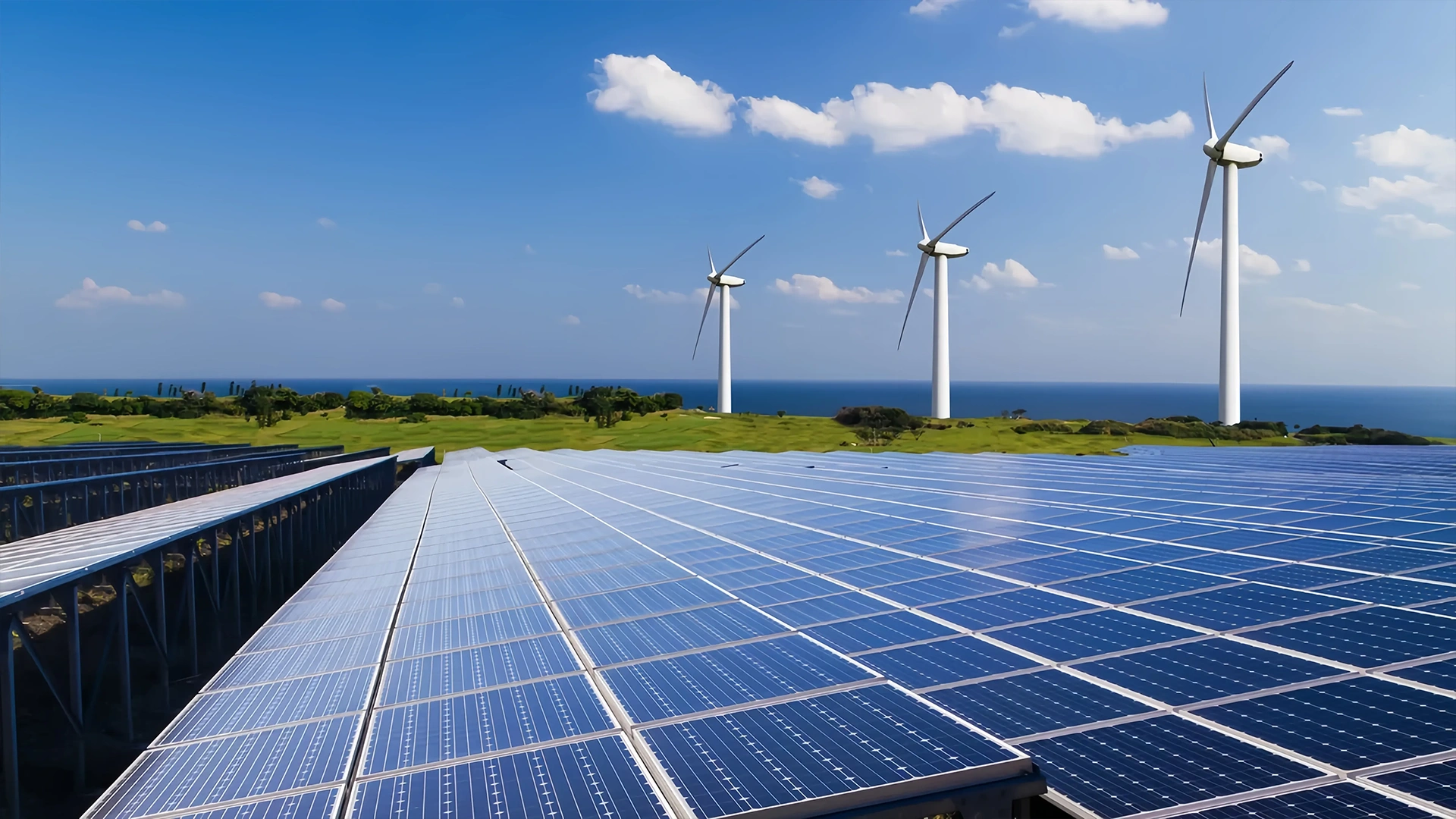
The rapid development of renewable energy is driving the use of advanced electrical equipment in wind power, photovoltaic systems, energy storage and charging infrastructure, where reliable insulation is essential for safe and stable operation. These systems involve power generation, power conversion, energy storage and electrical transmission, creating requirements for materials with electrical insulation, mechanical strength, thermal stability, moisture resistance and dimensional stability. Typical applications include wind turbine generators, PV inverters, combiner boxes, energy storage systems, battery equipment, charging stations, power converters and electrical cabinets, where insulating materials can be used for electrical barriers, insulation supports, busbar insulation components, terminal insulation parts, structural components and other customized machined parts according to the equipment design and operating requirements.
Supporting Reliable Power Generation, Conversion and Energy Storage
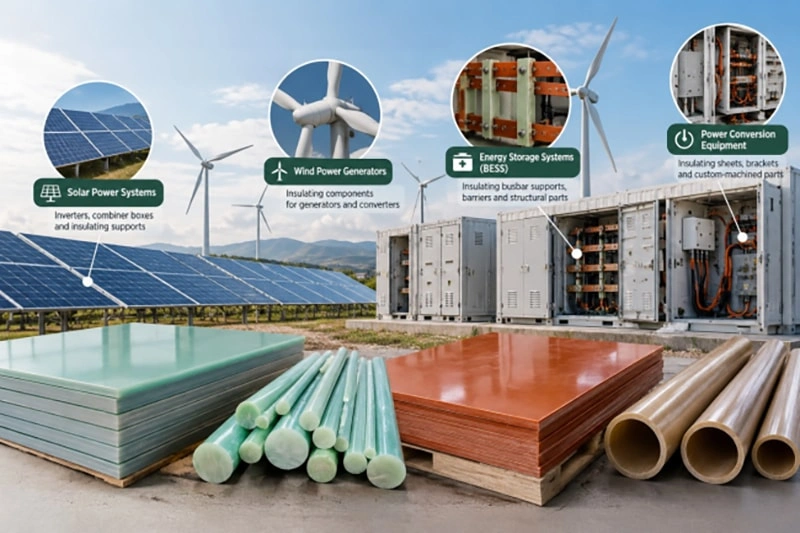
Renewable energy systems operate under conditions that place sustained demands on electrical insulation. Solar inverters, wind turbine generators, power converters and battery energy storage systems must manage electrical stress, heat and mechanical loading while maintaining reliable operation over extended service periods.
As renewable energy installations increase in capacity and power density, insulation materials must perform more than a protective function. They often provide structural support, maintain conductor separation and preserve dimensional accuracy within compact electrical assemblies.
YILONG manufactures electrical insulation materials and precision-machined thermoset composite components for renewable energy equipment. Our capabilities include glass-epoxy laminates, polyester-glass composites, high-temperature insulating materials and custom components manufactured to customer drawings.
By combining material manufacturing with precision machining, we support equipment manufacturers in addressing the electrical, thermal and mechanical requirements of modern energy systems.
Why Electrical Insulation Matters in Renewable Energy
The reliability of renewable energy equipment depends on the interaction between electrical design, operating temperature, environmental exposure and component geometry.
A material with high dielectric strength may not necessarily offer the best performance under sustained heat, mechanical loading or contaminated conditions. Selecting insulation therefore requires an understanding of how different stresses affect the material throughout service.
Electrical Reliability and Insulation Coordination
Renewable energy equipment contains conductors and components operating at different electrical potentials.
Insulating barriers, support plates and spacers help maintain separation between these parts and surrounding structures.
The selection of electrical insulation materials must consider dielectric strength, insulation resistance and, where relevant, surface tracking resistance.
These properties describe different aspects of insulation performance.
Dielectric strength relates to resistance against breakdown through the material under defined test conditions. Tracking resistance concerns the development of conductive paths across an insulating surface exposed to electrical stress and contamination.
Neither property alone establishes the suitability of a component for a particular system voltage.
Electrical clearances, creepage distances, insulation coordination and the geometry of the finished assembly must also be considered.
Thermal Performance in High-Power Equipment
Power conversion equipment generates heat through semiconductor switching, conductor resistance and other electrical losses.
Insulating components positioned near these heat sources may experience sustained elevated temperatures and repeated thermal cycling.
Temperature can influence resin properties, mechanical strength and long-term dielectric performance. Thermal expansion differences between insulating components and adjacent metal parts may also generate mechanical stresses.
High-temperature glass-epoxy laminates and other specialized insulating materials provide options for equipment operating under demanding thermal conditions.
However, the correct material grade should be selected according to the required property retention, actual component temperature and relevant test data—not simply a published maximum temperature.
Mechanical Integrity and Dimensional Stability
Electrical insulation components frequently serve as mechanical supports.
Busbar mounting blocks, insulating spacers and equipment plates may carry fastening loads, resist vibration and maintain precise positioning between conductors.
Glass-fiber-reinforced thermoset composites offer useful strength, rigidity and dimensional stability at relatively low weight.
Their mechanical properties depend on reinforcement architecture and loading direction. In laminated materials, strength measured along the laminate can differ significantly from strength through its thickness.
These directional properties should be considered when designing components with mounting holes, grooves or concentrated loads.
Environmental Resistance and Long-Term Performance
Renewable energy installations may be exposed to humidity, dust, salt-laden air and substantial temperature fluctuations.
Such conditions can affect insulation resistance, surface tracking behavior and mechanical performance.
Thermoset composites provide useful resistance to many industrial environments, but moisture absorption, ultraviolet resistance and chemical compatibility vary by formulation.
For outdoor installations, environmental suitability should be established through appropriate material selection, component design and qualification testing.
Applications Across Renewable Energy Systems
Solar Power: Insulation for Inverters and Electrical Distribution
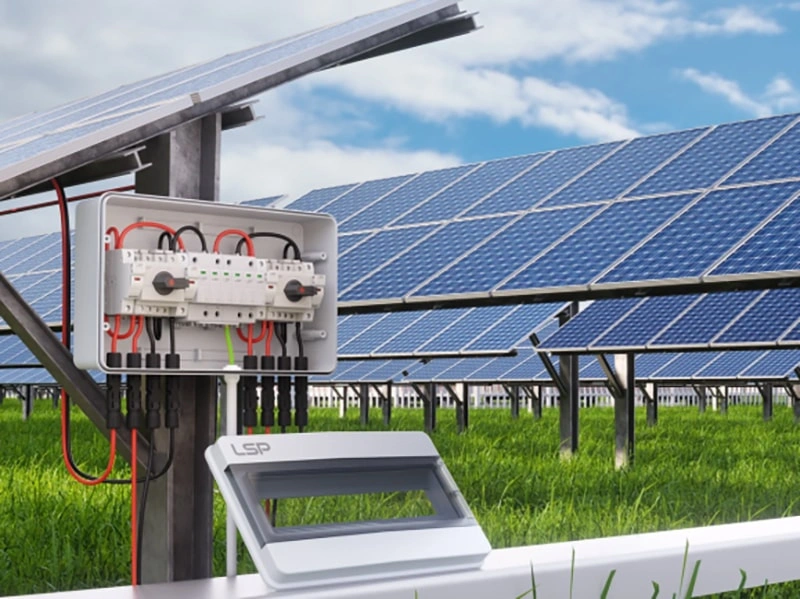
Solar photovoltaic systems rely on electrical equipment to convert, control and distribute generated power.
Within solar inverters, combiner assemblies and related electrical distribution equipment, insulating components help separate conductive structures and support electrical connections.
Glass-epoxy and polyester-glass laminates may be considered for insulating barriers, busbar supports, mounting plates and terminal support components.
The selection of materials depends on operating voltage, thermal conditions, mechanical loading and the installation environment.
For example, GPO-3 polyester-glass laminate is widely used in electrical insulation applications where structural strength, flame-retardant behavior and tracking resistance are relevant.
Selected high-CTI epoxy-glass laminates offer additional options for compact electrical assemblies.
In power electronic equipment, the electrical and thermal design must account for local hot spots, conductor spacing and possible contamination.
The insulating component must be evaluated as part of the complete assembly rather than solely by its material data sheet.
Wind Energy: Insulation Under Thermal and Mechanical Stress
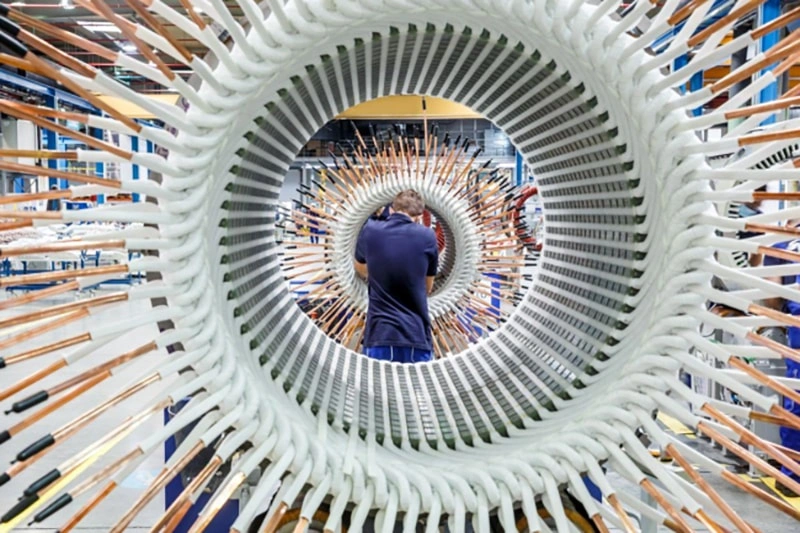
Wind turbines contain electrical and mechanical systems exposed to changing operating loads.
Generators, converters and associated electrical equipment require insulation that maintains performance despite vibration, temperature fluctuations and sustained operating stress.
In wind turbine generators, insulating materials may be used in winding support structures, slot wedges, spacers and terminal assemblies.
Glass-epoxy laminates provide combinations of electrical insulation and mechanical strength for selected structural insulation applications.
Higher-temperature grades, including suitable G11 and EPGC308 materials, may be considered where increased thermal performance is required.
Mica-based insulation materials are also used in certain generator winding insulation systems because of their dielectric and thermal characteristics.
Material selection must distinguish between structural insulating components and the insulation systems applied directly to windings.
For converter cabinets and electrical distribution assemblies, laminated insulating barriers and support components may be manufactured to specific dimensional and electrical requirements.
Battery Energy Storage Systems: Insulation and Structural Separation
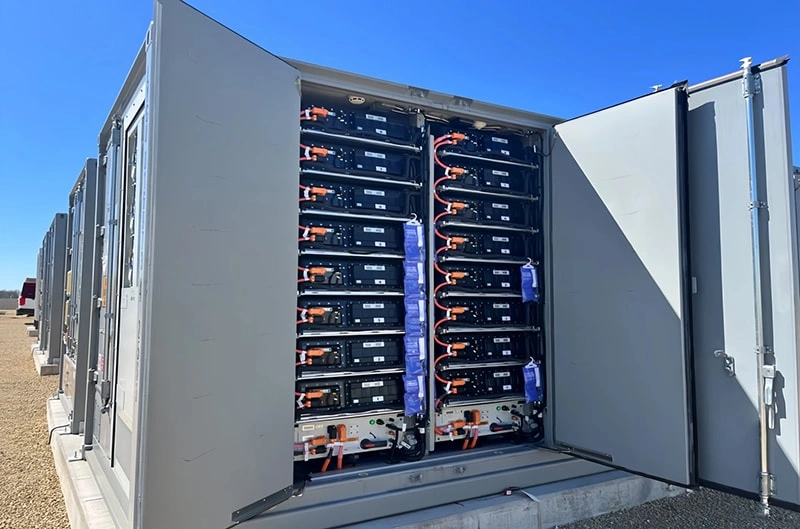
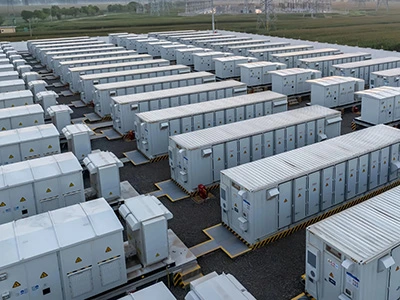
Battery energy storage systems (BESS) combine battery modules, electrical distribution equipment, power conversion systems and protective controls.
Electrical insulation is required throughout these assemblies to separate conductive parts and maintain safe equipment operation.
Thermoset composite materials can be considered for selected busbar supports, insulating barriers, mounting plates and structural spacers.
Their suitability depends on the location and function of each component.
Insulation used inside a battery pack may have different requirements from insulation used in an external power conversion cabinet.
Electrical properties, temperature resistance, flame behavior, dimensional stability and environmental exposure must be evaluated according to the specific application.
Importantly, a material's general flame-retardant classification does not establish its ability to prevent or contain battery thermal runaway.
Thermal propagation resistance and battery system safety require application-specific testing and evaluation.
YILONG supplies insulating laminates and custom-machined components that can be assessed for use in battery energy storage equipment.
Renewable Energy Power Conversion and Grid Connection
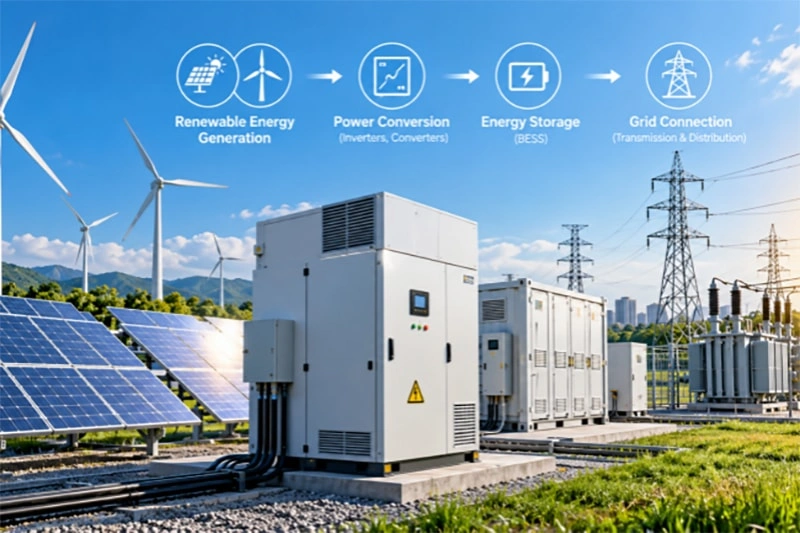
Solar and wind generation systems depend on power conversion and electrical distribution equipment to deliver usable electricity.
Converters, transformers, switchgear and grid-connection assemblies contain insulating structures that support conductors, separate electrical potentials and maintain mechanical positioning.
Glass-epoxy and polyester-glass composites provide options for insulating barriers, mounting plates and support components.
In higher-temperature or mechanically demanding locations, specialized laminate grades may be required.
The selection process should consider the interaction between electrical stress, heat, mechanical loads and the surrounding environment.
For high-voltage assemblies, insulation coordination and component geometry remain as important as the intrinsic properties of the selected material.
Selecting Composite Materials for Renewable Energy Equipment
The most appropriate electrical insulation material depends on the component's primary function and operating environment.
Glass-Epoxy Laminates
G10 and FR4 are glass-fiber-reinforced epoxy laminates offering useful electrical insulation, mechanical strength and machinability.
They are candidates for mounting plates, insulating spacers and structural components where their specified properties meet the application requirements.
FR4 grades provide flame-retardant characteristics, although compliance with a particular fire or equipment standard must be verified separately.
For applications involving elevated temperatures, suitable G11, FR5 and specialized EPGC grades offer additional options.
Polyester-Glass Laminates
GPO-3, also known as UPGM203, combines polyester resin with glass-mat reinforcement.
It is commonly used for electrical insulating barriers, supports and structural components.
Its electrical tracking resistance and flame-retardant characteristics make it relevant to selected power distribution and conversion applications, subject to verification of the particular grade.
Mica and High-Temperature Insulation
Mica-based materials provide valuable dielectric properties at elevated temperatures.
They are used in selected electrical insulation systems where conventional polymer composites may not provide the required combination of thermal and electrical performance.
Actual properties depend on the mica type, binder, reinforcement and product construction.
Engineering Requirements Beyond Material Grade
Material selection should address the operating conditions of the finished component.
These include voltage stress, temperature, mechanical loading, moisture exposure, dimensional tolerances and relevant compliance requirements.
A suitable grade designation is the starting point—not a substitute for engineering verification.
Integrated Manufacturing and Precision Machining
Controlled Composite Manufacturing
The performance of thermoset laminates depends on reinforcement arrangement, resin impregnation, consolidation and curing.
Variations in these processes can affect mechanical integrity, dielectric properties and dimensional consistency.
YILONG integrates fiberglass production, resin impregnation and laminate pressing within its manufacturing operations.
Our facilities include nine gluing lines, multi-layer vacuum presses, 2,000-ton and 3,000-ton presses, and automated production equipment.
This manufacturing infrastructure supports a range of electrical insulating laminates in different grades and dimensions.
CNC-Machined Insulating Components
Renewable energy equipment often requires insulating components with specific geometries rather than standard sheet materials.
Mounting holes, slots, grooves and complex profiles must be produced while maintaining dimensional accuracy and preserving laminate integrity.
Machining conditions should be selected to minimize edge damage, delamination and unnecessary stress concentrations.
With 98 CNC machines, YILONG manufactures custom insulating components according to customer drawings and agreed tolerances.
Our capabilities include machining glass-epoxy, polyester-glass, phenolic and other suitable insulating materials.
Quality Management and Technical Documentation
YILONG operates under an ISO 9001 quality management system.
Material inspection and technical documentation can be reviewed according to the specified grade, applicable standards and customer requirements.
Depending on the application, relevant evaluation may include dimensional inspection, mechanical properties, dielectric performance and other material-specific tests.
Testing conditions and specimen orientation should be clearly identified when comparing material properties.
Supporting Renewable Energy Equipment Manufacturers
Renewable energy manufacturers need electrical insulation materials that combine appropriate performance, manufacturing consistency and practical component design.
YILONG brings together laminate production and precision machining capabilities to support these requirements.
For custom projects, our team can review material specifications, operating conditions, drawings, machining requirements and production quantities to determine manufacturing feasibility.
By combining material expertise with integrated manufacturing and precision machining, YILONG supports the development of reliable insulation components for solar power, wind energy and battery energy storage systems.
Engineered for a More Reliable Energy Future
As renewable energy technologies continue to evolve, dependable electrical insulation remains essential to equipment safety and performance. YILONG is committed to providing high-quality composite materials and precision-machined components that meet the changing demands of modern energy systems.
 |
 |
 |
 |
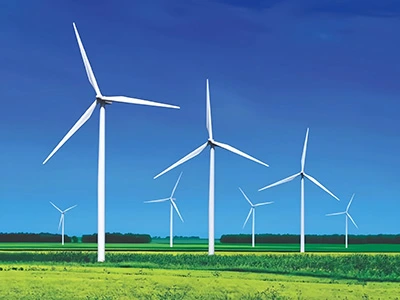
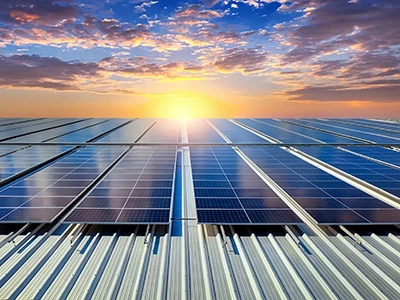
| Wind Power | Photovoltaic | Energy Storage | Charging Infrastructure |
Dielectric strength measures a material's resistance to electrical breakdown under defined test conditions. It does not fully represent long-term performance in an operating system.
In solar inverters and power converters, insulation may be exposed to repetitive voltage pulses, temperature fluctuations, humidity and surface contamination. These conditions can contribute to insulation degradation, surface tracking or partial discharge.
Reliable insulation design therefore requires consideration of working voltage, transient overvoltages, creepage and clearance distances, material properties and the operating environment.
No. The Comparative Tracking Index (CTI) measures resistance to surface tracking under standardized test conditions. It is not a voltage rating for the finished insulating component.
Under IEC 60664-1, materials with CTI values of 600 or higher fall within Material Group I, which can influence creepage-distance requirements.
However, insulation coordination must also consider working voltage, pollution degree, overvoltage conditions, altitude and equipment design.
For high-voltage DC applications, a high CTI value alone is insufficient to establish electrical safety or compliance.
Not necessarily. FR4 materials vary in resin formulation, glass transition temperature (Tg) and long-term thermal endurance.
A high Tg does not automatically indicate that a laminate can operate continuously at the same temperature. Tg describes a change in polymer behavior, whereas thermal endurance concerns the retention of specified properties after prolonged exposure to heat.
For components exposed to sustained elevated temperatures, suitable G11, FR5 or specialized high-temperature epoxy-glass grades may offer better options.
Selection should be based on verified thermal endurance data, mechanical property retention and actual operating conditions.
No. UL 94 V-0 evaluates the burning behavior of material specimens under specified laboratory conditions. It does not establish the ability of an insulating component to contain battery thermal runaway or prevent fire propagation.
Battery energy storage systems require broader safety evaluation. UL 9540A addresses thermal runaway behavior and associated fire propagation hazards at defined levels of battery system testing.
GPO-3 and FR4 may be suitable for selected electrical barriers and structural insulation components, but their flame-retardant ratings should not be interpreted as evidence of thermal runaway protection.
Power electronic converters generate voltage waveforms that differ from conventional sinusoidal AC supplies.
Fast switching transitions and repetitive voltage pulses can produce localized electrical stress, particularly around conductor edges, insulation interfaces and regions with nonuniform electric fields.
Depending on the design, these conditions may increase the risk of partial discharge and accelerate insulation ageing.
Material selection should therefore consider not only conventional dielectric strength but also the actual voltage waveform, electric-field distribution, insulation geometry and applicable equipment-level testing requirements.
Glass-fiber-reinforced laminates are anisotropic, meaning their properties differ with direction.
A laminate may exhibit high flexural strength in one loading direction while offering different strength or resistance to interlaminar stresses in another.
For busbar supports and insulating spacers, bolt preload, vibration, bending loads and hole positioning can introduce stresses that are not represented by a single published strength value.
Engineers should evaluate laminate orientation, thickness, edge distances, fastening arrangements and relevant mechanical test data before finalizing component geometry.
Outdoor suitability depends on the material's actual exposure conditions.
Moisture, condensation, salt contamination, ultraviolet radiation and temperature cycling can affect electrical and mechanical performance. Even components installed inside outdoor cabinets may experience condensation or contamination.
Relevant evaluation may include water absorption, insulation resistance after moisture conditioning, tracking resistance, thermal ageing and application-specific environmental testing.
Not all fiberglass laminates are inherently suitable for prolonged direct outdoor exposure. Material grade, protective design and installation environment must be considered together.
Documentation should match the material's intended function and the applicable equipment requirements.
Depending on the application, manufacturers may request material identification and traceability, dimensional inspection records, dielectric strength results, insulation resistance data, mechanical test results, thermal performance information and relevant flammability or tracking-resistance test reports.
Test methods, specimen thickness, conditioning and laminate orientation should be identified where they affect the reported results.
Material-level test reports support engineering evaluation but do not replace qualification or certification of the finished electrical equipment.

No.3, Mianzhi Street, Zhucheng, Shandong, China


Copyright © 2026 by Qingdao Yilong Insulation Material Company Limited All Rights Reserved


