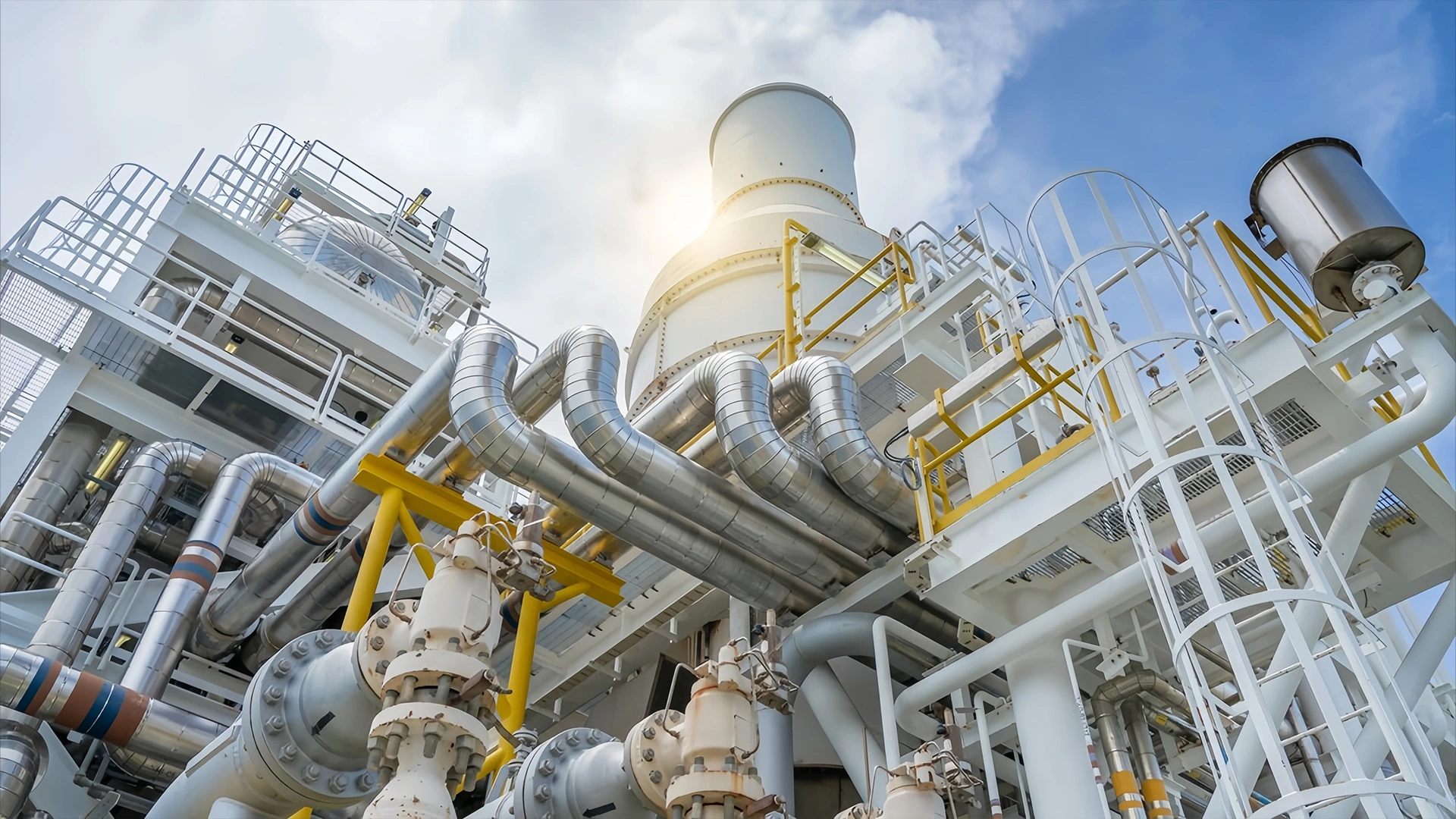
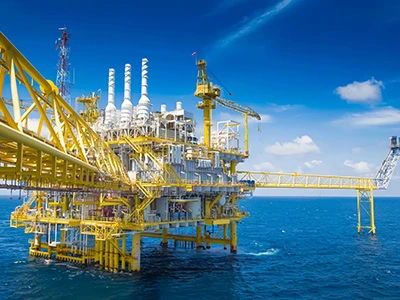
Oil, gas and petrochemical equipment operates in demanding environments involving high temperatures, pressure, chemicals, moisture and continuous mechanical loads. Insulation and engineered composite materials are used to provide electrical isolation, mechanical support, wear resistance and dimensional stability in equipment such as pumps, compressors, motors, valves, electrical systems and pipeline-related equipment. Depending on the application, these materials can be used for bushings, sleeves, wear-resistant components, insulation barriers, support parts and other precision-machined components, with material selection based on the required electrical, mechanical, thermal and chemical resistance.
Oil & Gas
Electrical Insulation Materials for Oil & Gas Applications
In oil and gas pipeline systems, electrical isolation helps maintain the intended separation between metallic structures, particularly where cathodic protection is used to control corrosion. Even a small conductive path through a flange bolt can compromise an otherwise properly installed isolation assembly.
Electrical insulation is also essential in motors, generators, power distribution equipment, and other electrical systems used throughout oil and gas facilities.
These applications require materials that provide reliable electrical insulation while supporting mechanical loads and maintaining dimensional stability under specified operating conditions.
YILONG supplies high-performance electrical insulation laminates and precision-machined components for oil and gas applications, supporting reliable electrical isolation and mechanical performance across a range of industrial equipment.Our main materials include g10 material, fr4 material, textolite, gpo-3, bakelite and other high performance insulating materials.
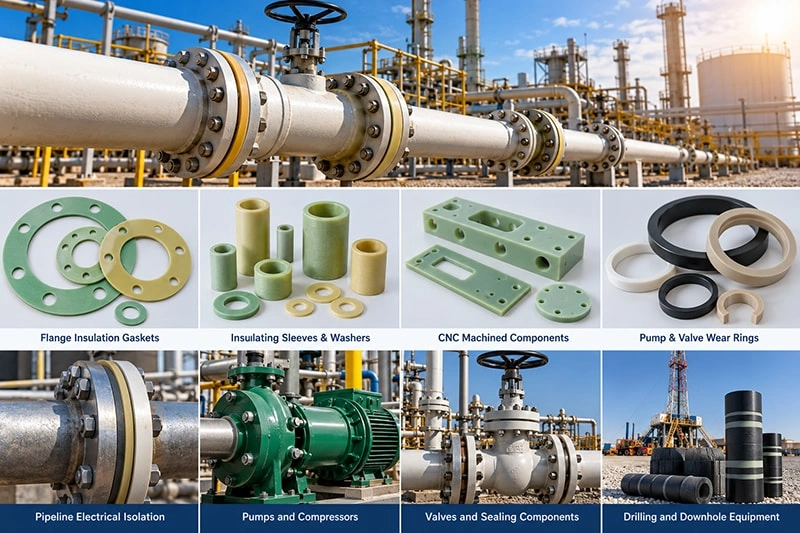
Benefits of Electrical Insulation Laminates in Oil & Gas
Glass-epoxy and phenolic laminates are used in industrial insulation applications because they offer a practical combination of electrical, mechanical, and manufacturing properties.
● Electrical insulation: Helps prevent unintended electrical continuity between metallic components and provides insulation within electrical assemblies.
● Mechanical strength: Reinforced laminates provide rigidity and load-bearing capability for appropriately designed insulating washers, spacers, and supports.
● Resistance to electrochemical corrosion: Unlike metallic components, insulating laminates do not undergo electrochemical corrosion, although chemical compatibility must still be verified.
● Dimensional stability: Suitable grades maintain component dimensions under defined temperature, moisture, and loading conditions.
● Temperature performance: Different laminate grades offer different levels of elevated-temperature performance for electrical and structural applications.
● Machinability: Sheets, rods, and tubes can be machined into insulating components with specified dimensions, tolerances, and configurations.
Material suitability depends on the selected grade, component design, and actual service conditions.
Applications of Insulation Materials in Oil & Gas
1.Pipeline Flange Electrical Isolation
Flange isolation systems are used in oil and gas pipelines to electrically separate connected metallic sections where required by the corrosion-control design.
These systems are particularly relevant to pipelines using cathodic protection, where unwanted electrical continuity may affect the distribution of protective current.
A flange isolation kit generally includes an insulating gasket, bolt sleeves, insulating washers, and metallic backing washers.
Each component performs a different function in maintaining electrical separation.
G10 Insulating Gaskets and Gasket Carriers
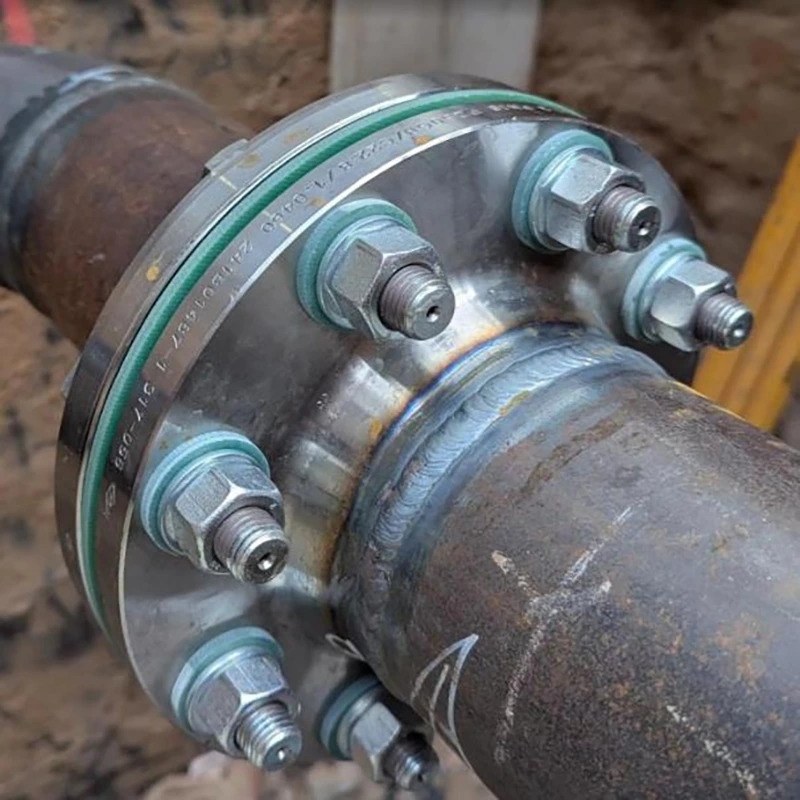
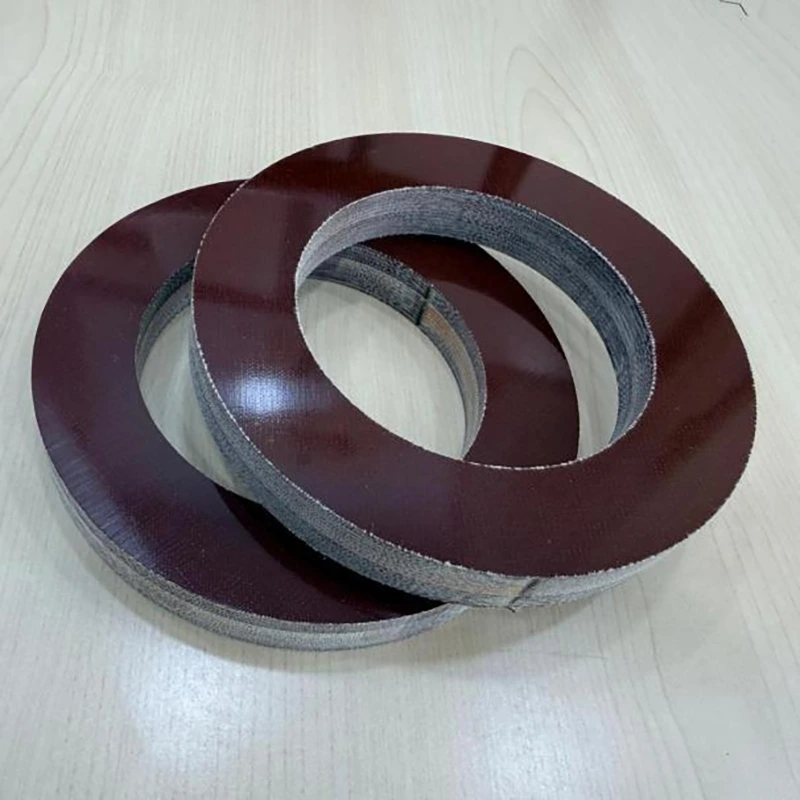
G10 glass-epoxy laminate is used as an electrically insulating structural material in engineered flange isolation systems.
Its combination of electrical insulation and mechanical strength makes it suitable for use as an insulating gasket carrier or other rigid component within the assembly.
In many designs, the G10 carrier provides electrical separation and mechanical support, while a separate sealing element creates the pressure-tight seal.
The complete gasket system must be selected according to flange dimensions, pressure class, operating temperature, and the process medium. A standard machined G10 ring should not be assumed to function as a qualified pressure-sealing gasket.
Insulating Bolt Sleeves and Washers
Even when an insulating gasket separates the flange faces, metallic bolts can create an unintended conductive path between the connected flanges.
Insulating bolt sleeves are installed around bolts or studs to prevent direct contact with the flange bores. Insulating washers separate metallic fastening components from the flange surfaces.
G10 and suitable phenolic laminates can be machined into insulating sleeves and washers according to customer drawings.
For these components, dimensional accuracy and mechanical performance are important. Sleeve wall thickness, washer thickness, hole diameter, and resistance to installation loads must be considered.
The performance of a flange isolation system depends on the complete assembly, including correct installation and the prevention of unintended metal-to-metal contact.
2. Electrical Insulation for Oil & Gas Equipment
Oil and gas production, processing, and transportation facilities rely on electrical equipment such as motors, generators, power distribution systems, and control assemblies.
Rigid insulating laminates may be used within these systems to separate conductive parts, provide mechanical support, and maintain the required electrical clearances.
Insulating Supports and Mounting Components
Glass-epoxy laminates can be machined into insulating support blocks, mounting plates, spacers, terminal supports, and insulating barriers.
Depending on the equipment design, these components may support conductors, separate metallic assemblies, or provide nonconductive mounting surfaces.
Typical components include:
● Insulating support blocks and mounting plates
● Electrical spacers and separators
● Terminal supports and insulating barriers
● Insulating bushings and sleeves
● Custom CNC-machined electrical insulation parts
For components exposed to fastening loads or vibration, mechanical strength and dimensional accuracy are as important as electrical insulation.
Material Selection for Electrical Equipment
G10 and FR4 are commonly used for rigid electrical insulation where mechanical strength and machinability are required.
FR4 provides flame-retardant characteristics, while suitable G11 and FR5 grades may be selected when improved elevated-temperature performance is necessary.
The final material selection should consider operating voltage, temperature, humidity, mechanical loading, and the applicable equipment specifications.
For electrical equipment installed in hazardous areas, compliance must be established for the complete equipment design. The use of an insulating laminate alone does not establish explosion-protection compliance.
Selecting Insulation Materials for Oil & Gas Applications
Different insulating materials provide different combinations of electrical, mechanical, and thermal properties.
|
Material |
Key characteristics |
Relevant applications |
|
G10 / EPGC201 |
Rigid electrical insulation, mechanical strength, machinability |
Flange insulating components, washers, sleeves, support blocks |
|
FR4 / EPGC202 |
Glass-epoxy insulation with flame-retardant properties |
Electrical mounting plates, insulating spacers, equipment components |
|
G11 / EPGC203 |
Improved elevated-temperature performance compared with conventional G10 |
Higher-temperature insulating supports and selected flange components |
|
FR5 / EPGC204 |
Higher-temperature, flame-retardant glass-epoxy insulation |
Selected electrical insulation components |
|
Cotton Phenolic |
Mechanical rigidity and grade-dependent electrical properties |
Selected insulating bushings, washers, and structural components |
|
Paper Phenolic |
Electrical insulation and machinability, with grade-dependent moisture and mechanical properties |
Electrical mounting plates, washers, spacers, and insulating parts |
The selection should be based on the relevant technical data sheet and the requirements of the finished component.
For flange isolation applications, the material must also be compatible with the engineered gasket system and its installation conditions.
Key Performance Requirements in Oil & Gas Environments
Insulating components in oil and gas facilities may experience moisture, temperature changes, mechanical loading, and exposure to industrial chemicals.
The following factors should be considered during material selection.
Electrical Insulation and Moisture Resistance
Moisture and surface contamination can reduce insulation resistance and create unwanted electrical leakage paths.
Water absorption, surface condition, and the installation environment should therefore be considered, particularly for components exposed to humidity or outdoor conditions.
Temperature and Mechanical Loading
Insulating washers, sleeves, and supports may be subjected to compression, bolt preload, vibration, or sustained mechanical stress.
Elevated temperatures can affect the long-term mechanical performance of laminated materials.
For load-bearing components, engineers should consider compressive properties, laminate orientation, dimensional stability, and the possibility of creep under sustained loading.
Chemical Compatibility
Not every insulating component comes into direct contact with oil or gas production fluids.
Where exposure to hydrocarbons, brine, treatment chemicals, or other process media is expected, chemical compatibility must be evaluated for the specific material grade and service conditions.
Electrical insulation performance alone does not establish suitability for direct process-fluid exposure.
Custom Insulation Materials and CNC Machining at YILONG
YILONG manufactures glass-epoxy and phenolic laminated sheets, rods, and tubes, and provides CNC machining services for custom electrical insulation components.
Our capabilities include:
● Glass-epoxy and phenolic laminate manufacturing
● CNC cutting, drilling, milling, and turning
● Custom insulating washers, sleeves, spacers, and support blocks
● Insulating mounting plates and components with complex geometries
● Manufacturing according to customer drawings and specifications
● Dimensional inspection and agreed material documentation
Critical dimensions such as thickness, inside and outside diameters, hole position, concentricity, and flatness can be reviewed according to the component design and machining requirements.
For quotation, customers are encouraged to provide drawings, material specifications, quantities, operating conditions, and any required inspection or certification documents.
 |
 |
 |
 |
| Oil & Gas | Oil & Gas Transportation | Petrochemical | Chemical Processing |
G10 materials is used in engineered flange isolation systems to help prevent unwanted electrical continuity between pipeline sections. Typical components include insulating gasket carriers, bolt sleeves, and washers.
Metallic bolts can create an electrical path between otherwise isolated flanges. Insulating sleeves separate bolts from flange holes, while insulating washers prevent direct electrical contact between metallic fasteners and flange surfaces.
G10 can provide electrical insulation and structural support within an engineered gasket assembly. However, pressure sealing typically requires a suitable sealing element. A standard G10 ring should not be assumed to provide a pressure-tight seal.
G10 provides mechanical strength and electrical insulation. FR4 materials add flame-retardant properties, while G11 offers improved elevated-temperature performance. FR5 combines higher-temperature performance with flame-retardant characteristics. Selection depends on the equipment's electrical, thermal, and mechanical requirements.
Chemical resistance depends on the resin system, temperature, exposure duration, and specific fluid. G10, FR4, and other glass-epoxy laminates should not be assumed compatible with all hydrocarbons, brine, or oilfield chemicals without appropriate verification.
Yes. YILONG manufactures glass-epoxy and phenolic laminated materials and provides CNC machining for insulating washers, sleeves, spacers, support blocks, mounting plates, and other components according to customer drawings and specifications.

No.3, Mianzhi Street, Zhucheng, Shandong, China


Copyright © 2026 by Qingdao Yilong Insulation Material Company Limited All Rights Reserved


